

Top Advantages of Digital Marketing for Business Growth
Last updated on January 10th, 2026 at 12:11 am
Digital marketing has become the backbone of modern business growth. Whether you run a small local shop, a startup, or a large enterprise, online channels help you reach the right people at the right time—without wasting budget.
Below, we’ll break down the top advantages of digital marketing, explain how they help businesses, and show how you can start using them effectively.
What are the advantages of digital marketing?
The advantages of digital marketing include cost efficiency, precise audience targeting, measurable performance, faster results, and easy scalability. Businesses can track user behavior in real time, optimize campaigns quickly, and reach customers across devices, making digital marketing more flexible and data-driven than traditional marketing.
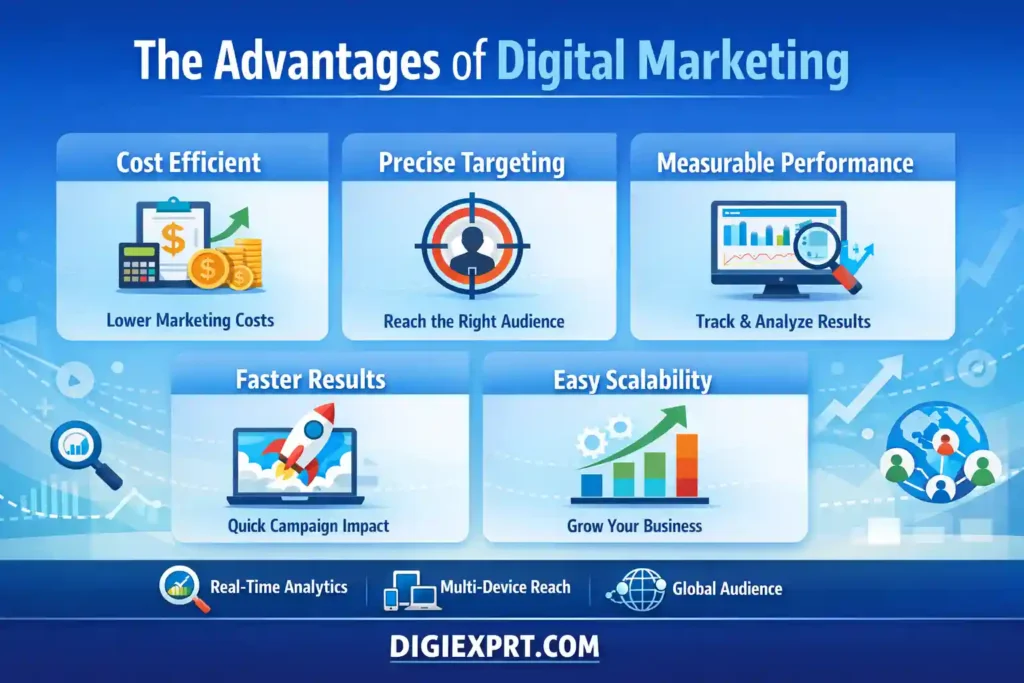
Table of Contents
- Why Digital Marketing Matters Today
- Cost-Effective Marketing for All Business Sizes
- Highly Targeted Audience Reach
- Measurable and Trackable Results
- Faster Campaign Execution and Optimization
- Scalable Growth Opportunities
- Better Customer Engagement and Relationships
- Data-Driven Decision Making
- Comparison Table: Digital vs Traditional Marketing
- Beginner-Friendly Digital Marketing Checklist
- How to Start Learning Digital Marketing the Right Way
- FAQs
- FAQ Schema (HTML)
Why Digital Marketing Matters Today
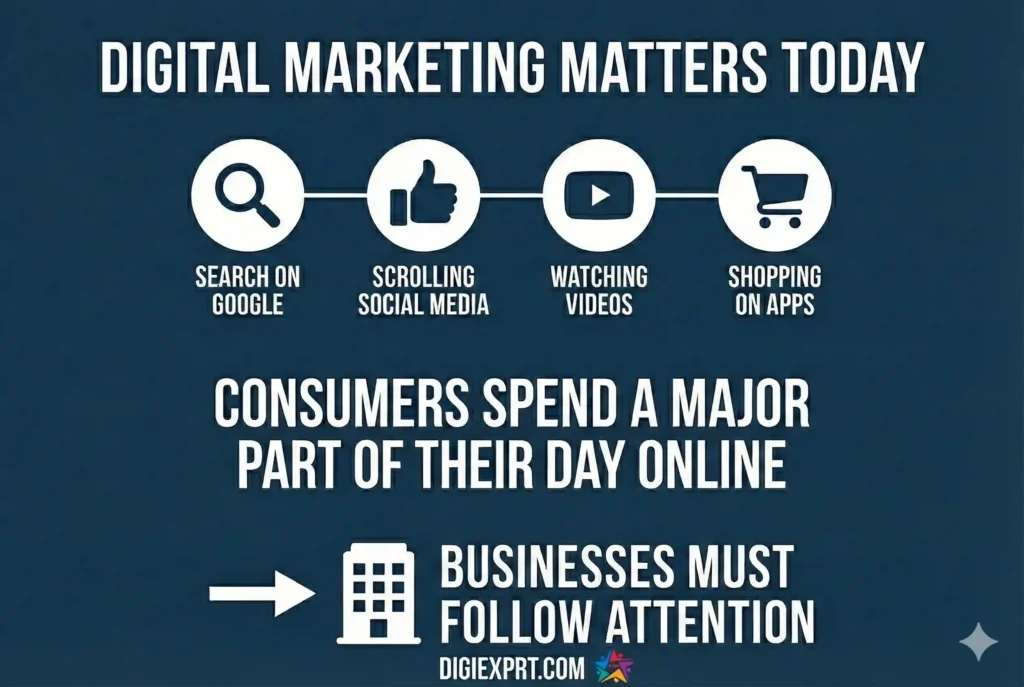
Consumers spend a major part of their day online—searching on Google, scrolling social media, watching videos, and shopping on apps. Businesses must follow attention.
Digital marketing allows brands to:
- Appear when users are actively searching
- Build trust through content and reviews
- Convert interest into sales with targeted ads
- Retain customers through email and remarketing
Now let’s explore the real advantages.
Cost-Effective Marketing for All Business Sizes
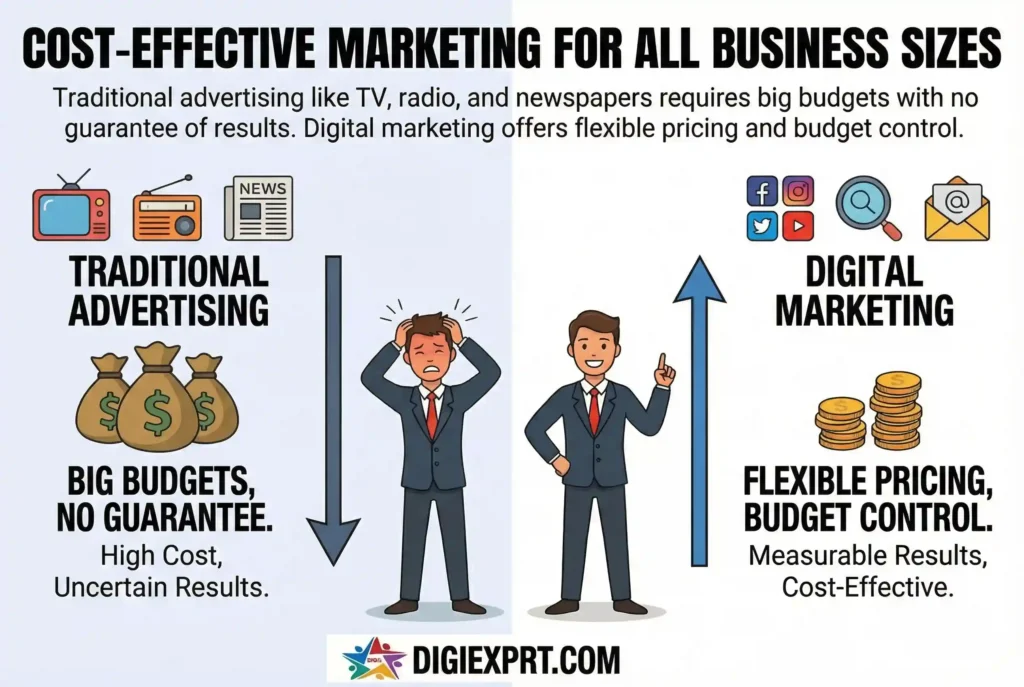
Traditional advertising like TV, radio, and newspapers requires big budgets with no guarantee of results. Digital marketing offers flexible pricing and budget control.
Why it’s budget-friendly:
- Start ads with small daily budgets
- Organic growth via SEO and content
- Pay only for clicks or conversions in paid ads
- Easy to pause or adjust campaigns anytime
This makes digital marketing ideal for:
- Small businesses
- Local service providers
- Startups testing new products
You invest where performance is visible, not just on exposure.
Highly Targeted Audience Reach
Unlike traditional marketing, digital platforms allow hyper-specific targeting.
You can target based on:
- Location
- Age and gender
- Interests and behavior
- Search intent
- Past website visits
This means your ads and content reach people who are already interested in your product or service, improving both conversion rate and ROI.
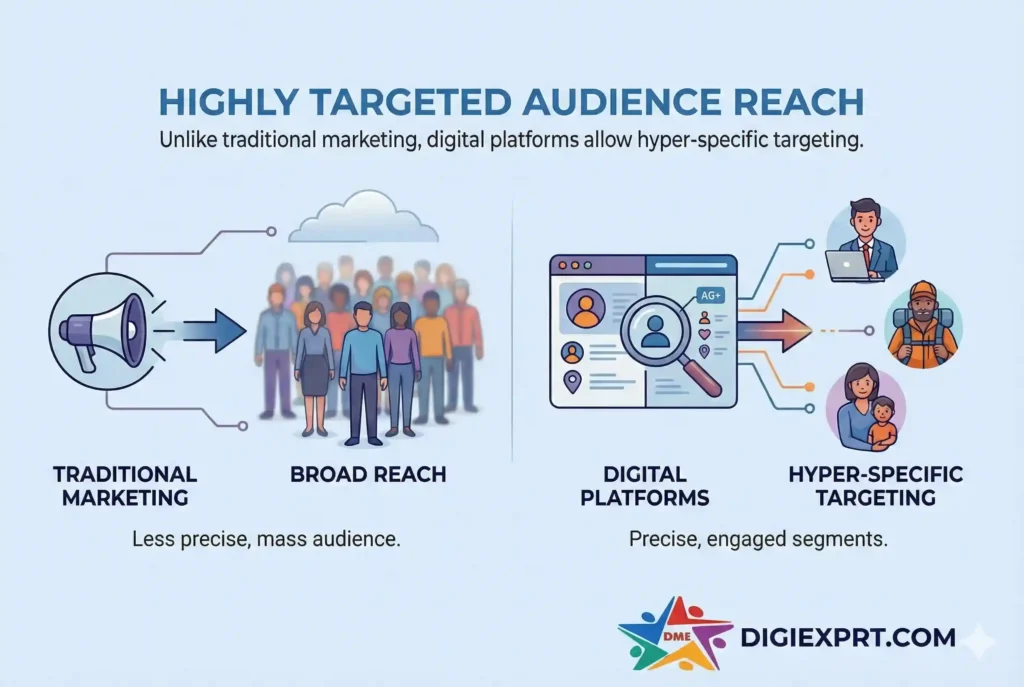
Examples of targeting:
- Showing gym ads to fitness-interested users
- Local service ads only within city radius
- Remarketing to visitors who didn’t purchase
Measurable and Trackable Results
One of the biggest advantages of digital marketing is transparency.
You can track:.0
- Website traffic
- Click-through rates
- Leads and sales
- Cost per result
- User behavior on pages
Tools like Google Analytics and ad dashboards provide real-time data so you know exactly what’s working and what’s not.
Why this matters:
- No guesswork
- Better budget allocation
- Faster improvement cycles
Faster Campaign Execution and Optimization
In digital marketing, you can launch a campaign within hours and start seeing results the same day.
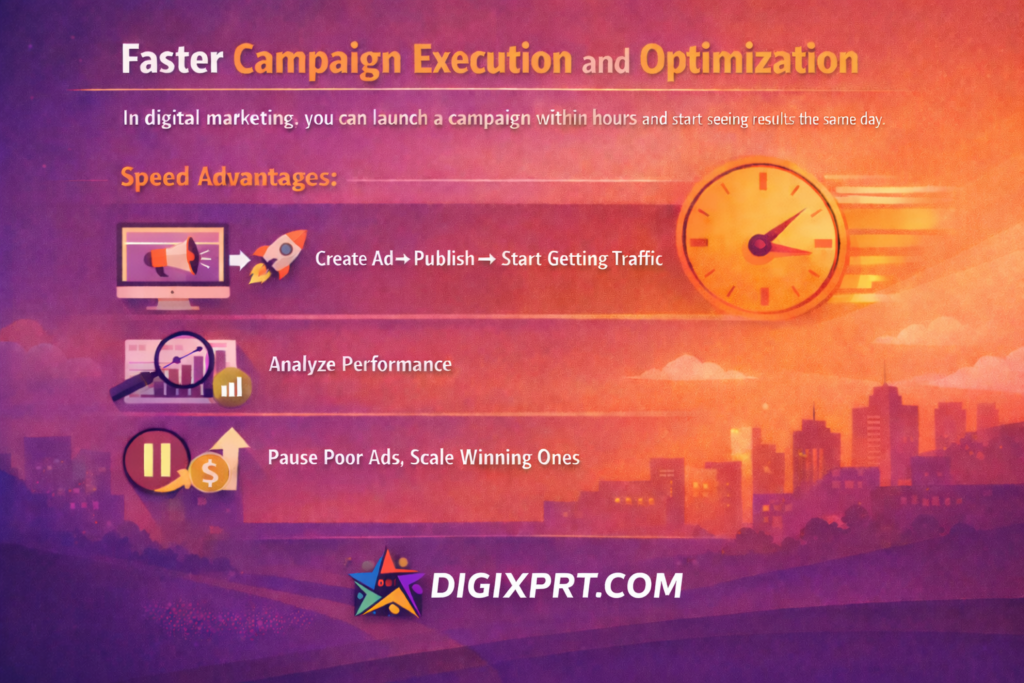
Speed advantages:
- Create ad → publish → start getting traffic
- Analyze performance
- Pause poor ads, scale winning ones
This agility helps businesses react to:
- Market trends
- Seasonal demand
- Competitor activities
Traditional marketing simply cannot match this flexibility.
Scalable Growth Opportunities
Digital marketing allows you to grow step by step or rapidly scale when needed.
How scaling works:
- Increase ad budget when ROI is positive
- Expand to new platforms and keywords
- Automate email and lead nurturing
- Retarget high-intent users
This makes it easier to move from:
Local → City → State → National → Global markets.
Better Customer Engagement and Relationships
Digital channels are two-way communication platforms.
You can engage via:
- Social media comments and DMs
- Email newsletters
- Chatbots and WhatsApp
- Personalized offers
This helps build:
- Brand trust
- Repeat customers
- Word-of-mouth referrals
Strong engagement leads to long-term business stability, not just one-time sales.
Data-Driven Decision Making
Every action in digital marketing produces data.
Data helps you understand:
- Which content converts best
- Which audience responds more
- What time users are active
- Which products sell more online
With this, you can:
- Improve product offerings
- Adjust pricing strategies
- Refine messaging
- Reduce wasted spend
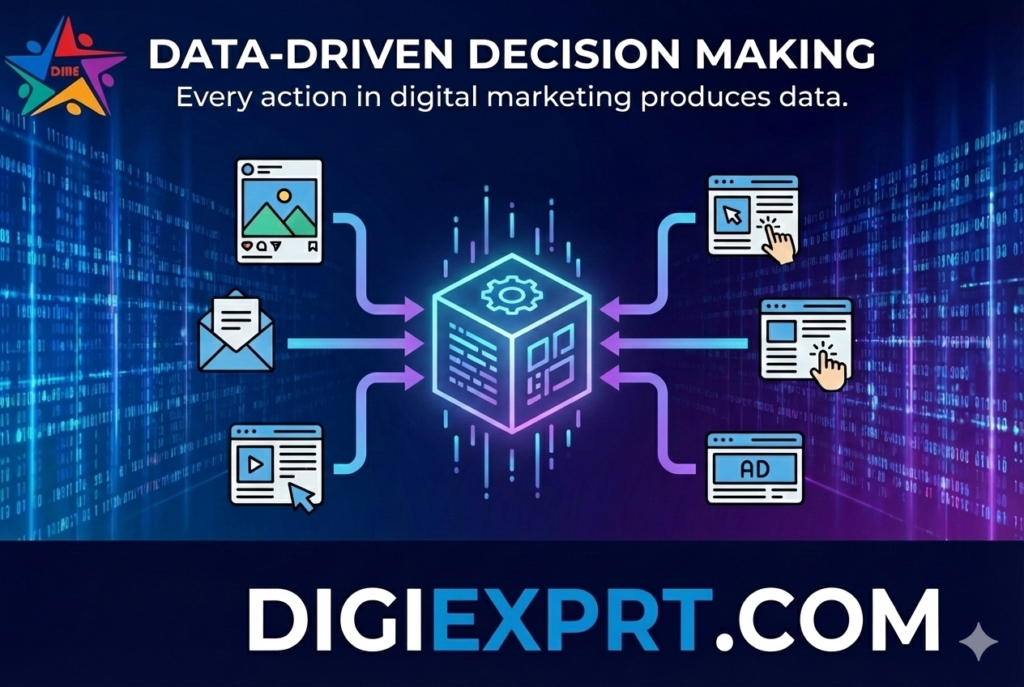
Marketing becomes a science, not just creativity.
Comparison Table: Digital vs Traditional Marketing
| Feature | Digital Marketing | Traditional Marketing |
|---|---|---|
| Cost | Flexible & affordable | Expensive |
| Targeting | Highly specific | Broad audience |
| Tracking | Real-time analytics | Hard to measure |
| Speed | Instant launch | Slow setup |
| Optimization | Continuous | Limited |
| Scalability | Easy to scale | Difficult |
Beginner-Friendly Digital Marketing Checklist
If you are new, start with these basics:
✅ Website & SEO
- Mobile-friendly website
- Basic on-page SEO
- Google Search Console setup
✅ Social Media Presence
- Choose 1–2 platforms only
- Post consistently
- Engage with comments
✅ Paid Advertising Basics
- Start with small budget
- Use conversion tracking
- Test multiple creatives
✅ Analytics Setup
- Google Analytics installed
- Track goals and leads
✅ Skill Development
- Learn SEO + Ads + Content fundamentals
- Practice with real projects
How to Start Learning Digital Marketing the Right Way
To fully benefit from the advantages of digital marketing, practical skills are essential. Learning from real tools and live campaigns builds confidence and job readiness.
If you are looking for structured learning, professional digital marketing training can help you understand:
- SEO and keyword strategy
- Paid ads platforms
- Analytics and reporting
- Marketing automation tools
Many learners prefer a local institute for hands-on support. A well-designed digital marketing course in Dehradun can offer classroom learning, live projects, and placement guidance. Programs like the Digiexprt digital marketing course focus on practical exposure rather than just theory, which helps students, job seekers, and business owners apply skills faster.
👉 Learn more here: https://digiexprt.com/
FAQs
1. Is digital marketing better than traditional marketing?
Digital marketing offers better targeting, lower costs, and measurable results. Traditional marketing still has value for branding, but digital provides higher ROI for most performance-driven campaigns.
2. Can small businesses benefit from digital marketing?
Yes. Small businesses can run low-budget ads, use local SEO, and grow through social media without spending heavily on mass advertising.
3. How long does digital marketing take to show results?
Paid ads can show results within days. SEO and content marketing usually take 3–6 months for strong organic growth, but benefits are long-term.
4. Which digital marketing channel is best for beginners?
SEO, social media marketing, and Google Ads are good starting points because they offer clear learning paths and measurable performance.
5. Do I need technical skills for digital marketing?
Basic computer skills are enough to start. Most platforms are user-friendly, and technical aspects can be learned gradually.
6. Is digital marketing a good career option?
Yes. Demand is high across industries, and roles include SEO executive, performance marketer, content strategist, and marketing analyst.
7. Can I learn digital marketing while working or studying?
Yes. Many training programs offer flexible schedules and online resources that allow learning alongside work or studies.