

Freelancing After Digital Marketing Training: Complete Beginner Guid
Last updated on April 9th, 2026 at 07:28 am
Freelancing after digital marketing training is one of the most common career questions in 2026—and for good reason. With businesses moving online faster than ever, skilled digital marketers are in demand globally. But is training alone enough to start freelancing? Or do you need years of experience first?
Let’s break it all down honestly, step by step.
What is freelancing after digital marketing training
Freelancing after digital marketing training means offering services like SEO, social media marketing, paid ads, or content marketing to clients independently instead of working a full-time job. With the right skills, portfolio, and strategy, beginners can start freelancing within months of completing training.
Why This Question Matters in 2026
Traditional jobs are no longer the only “safe” option. Many professionals now want freedom—location independence, flexible income, and control over projects. Digital marketing checks all those boxes.
However, many beginners worry:
- “Can I really get clients without job experience?”
- “Is freelancing too risky?”
- “What if I don’t earn initially?”
The good news? Freelancing is possible, but only if done the right way.
Table of Contents
- What Digital Marketing Freelancing Really Means
- Why Digital Marketing is Ideal for Freelancing in 2026
- Skills You Need Before Starting Freelancing
- Freelancing vs Job After Digital Marketing Training
- Step-by-Step: How to Start Freelancing After Training
- Beginner-Friendly Freelancing Checklist
- Common Mistakes New Freelancers Make
- FAQs: Freelancing After Digital Marketing Training
What Digital Marketing Freelancing Really Means
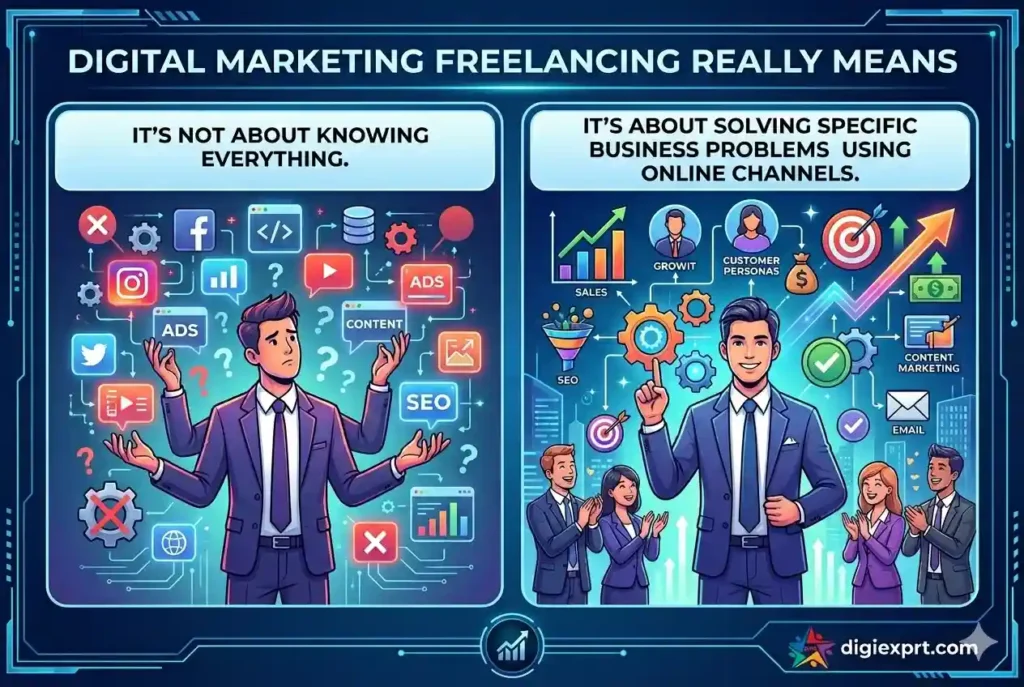
Digital marketing freelancing isn’t about knowing everything. It’s about solving specific business problems using online channels.
You might freelance as:
- SEO executive
- Social media manager
- Google Ads specialist
- Content marketer
- Email marketing specialist
- Funnel or landing page optimizer
Most successful freelancers start with one core skill, not all of them.
Why Digital Marketing is Ideal for Freelancing in 2026
Digital marketing has become one of the most freelancer-friendly careers globally.
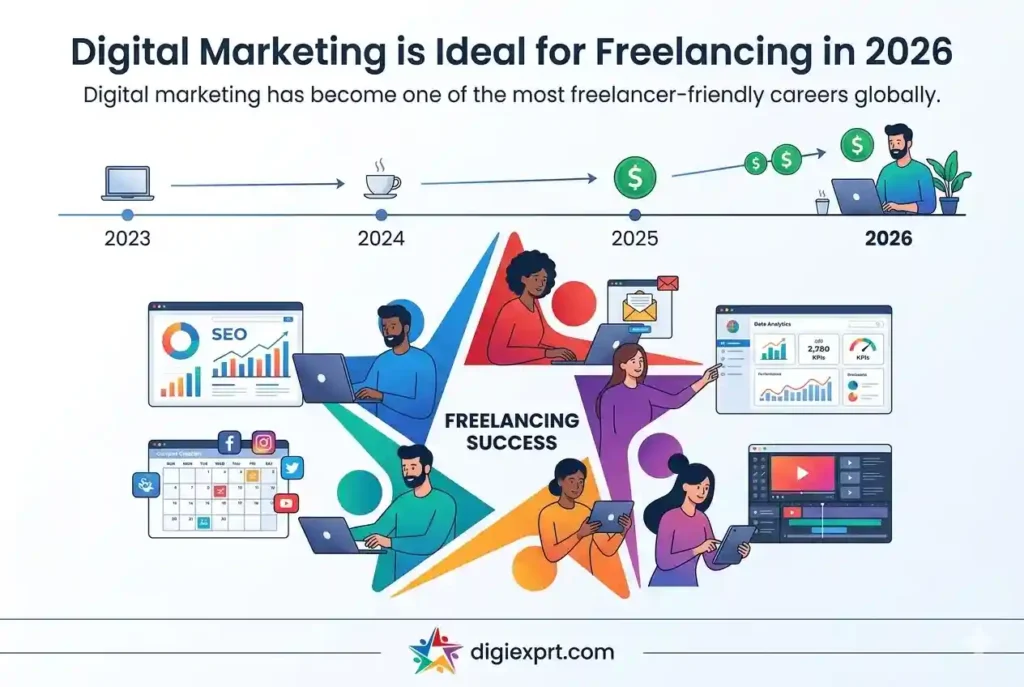
Key reasons:
- Low startup cost (laptop + internet)
- Global client opportunities
- Remote work flexibility
- Skill-based (degree not mandatory)
- Scalable income
Businesses prefer freelancers because they are cost-effective and specialized. That demand creates opportunity—especially for trained beginners.
Skills You Need Before Starting Freelancing
Training gives direction, but freelancing needs applied skills.
Core technical skills:
- SEO fundamentals & tools
- Social media content + analytics
- Google Ads & Meta Ads basics
- Keyword research
- Content strategy
Soft skills (often ignored):
- Client communication
- Time management
- Proposal writing
- Pricing & negotiation
If you’re enrolled in a practical digital marketing training, especially one that focuses on real projects, freelancing becomes much easier. Many learners prefer hands-on programs like a digital marketing course in dehradun because local mentorship plus live practice accelerates confidence.
Freelancing vs Job After Digital Marketing Training
| Factor | Freelancing | Job |
|---|---|---|
| Income | Variable, scalable | Fixed salary |
| Flexibility | High | Limited |
| Risk | Medium (initially) | Low |
| Learning Speed | Very fast | Moderate |
| Growth Limit | Unlimited | Role-based |
There’s no “right” choice. Many professionals start with a job and shift to freelancing later. Others freelance part-time while working.
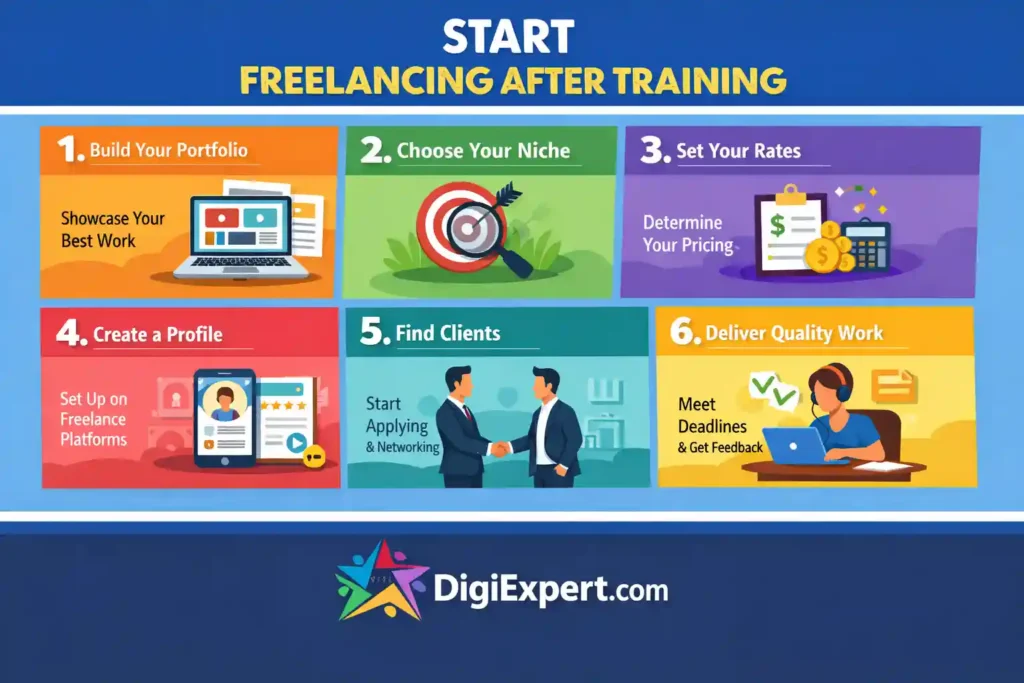
Step-by-Step: How to Start Freelancing After Training
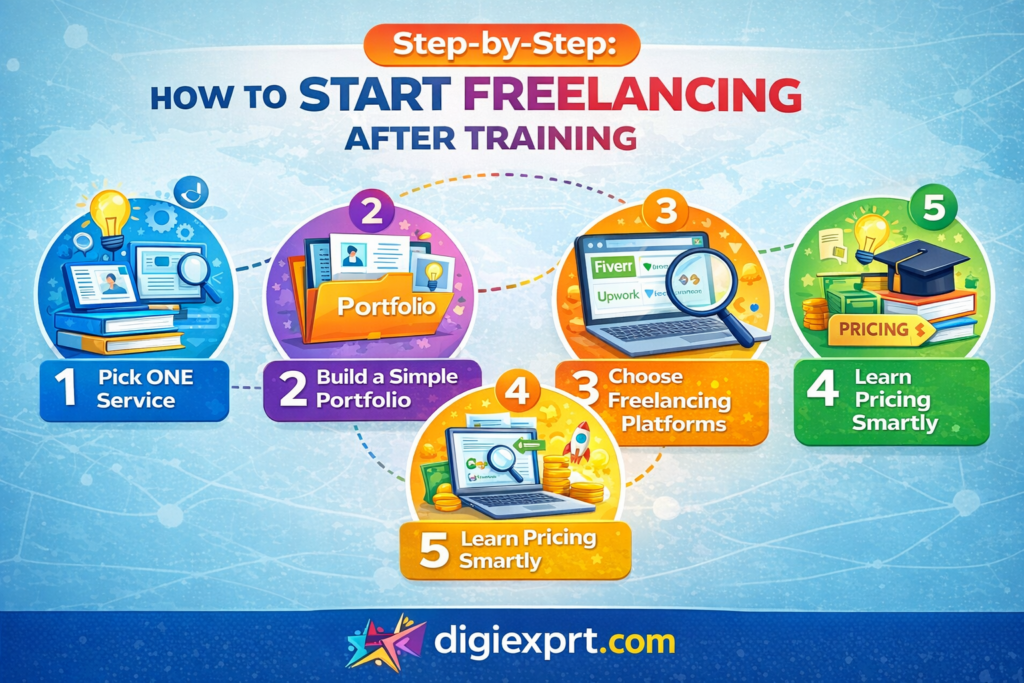
1. Pick ONE Service
Don’t offer everything. Choose one:
- SEO for local businesses
- Instagram management
- Google Ads setup
- Blog content optimization
2. Build a Simple Portfolio
No clients yet? That’s okay.
- Create sample projects
- Optimize your own blog or Instagram page
- Offer free/discounted work to 1–2 businesses
3. Choose Freelancing Platforms
- Upwork
- Fiverr
- Freelancer
- LinkedIn outreach
4. Learn Pricing Smartly
Avoid underpricing forever. Start beginner-friendly, then increase based on results.
5. Keep Learning
Freelancers who invest in continuous learning—through structured digital marketing training or advanced modules—grow faster. Many learners upgrade skills through programs like the digital marketing course to stay industry-ready.
Beginner-Friendly Freelancing Checklist
Before applying for your first client, make sure you have:
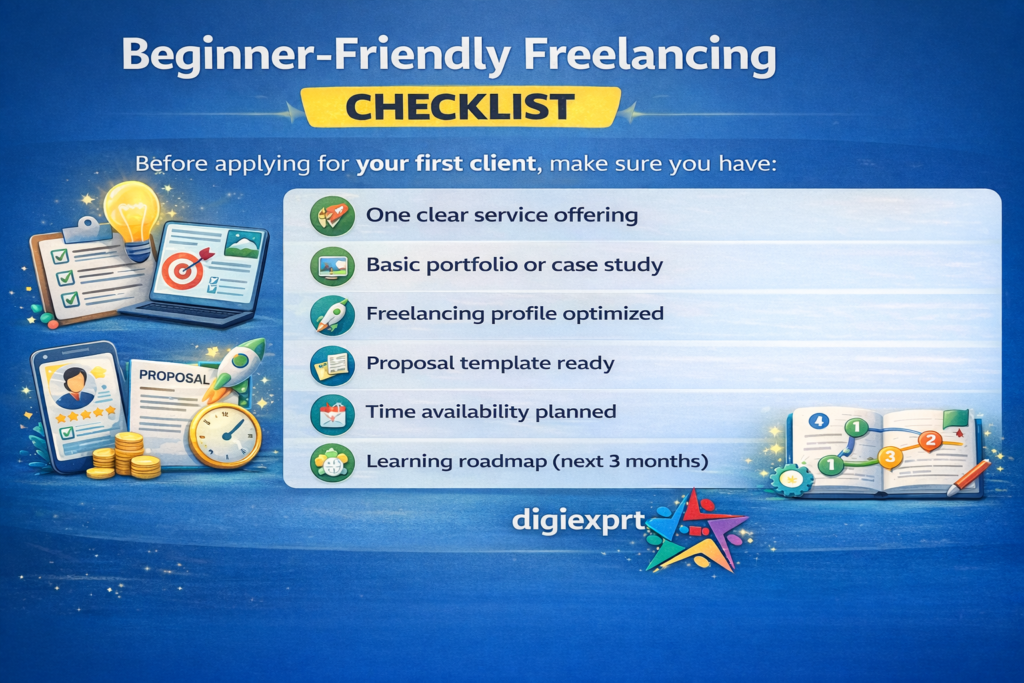
- ✅ One clear service offering
- ✅ Basic portfolio or case study
- ✅ Freelancing profile optimized
- ✅ Proposal template ready
- ✅ Time availability planned
- ✅ Learning roadmap (next 3 months)
This checklist alone saves beginners months of confusion.
- Trying to master everything at once
- Copy-pasting proposals
- Undercharging too long
- Ignoring communication skills
- Not updating skills regularly
Structured learning plus mentorship—like what you get in a solid digital marketing course in dehradun—helps avoid these mistakes early.
FAQs: Freelancing After Digital Marketing Training
1. Can I start freelancing immediately after training?
Yes, if your training includes practical projects and tools exposure.
2. Do clients hire beginners?
Clients hire problem-solvers, not resumes. Proof of work matters more than experience.
3. How long does it take to get first client?
Anywhere between 2 weeks to 3 months, depending on effort and positioning.
4. Is freelancing income stable?
Initially no, but with repeat clients and retainers, it becomes stable.
5. Which digital marketing skill is best for freelancing?
SEO, paid ads, and social media management are beginner-friendly and in demand.
6. Do I need certifications?
They help credibility but are not mandatory if skills are strong.
7. Should I do a job first?
Optional. Many do freelancing alongside jobs to reduce risk.