

SEO-vs-PPC-which-is-better-for-lead-generation?
Last updated on March 2nd, 2026 at 06:22 am
Businesses today face a common marketing dilemma: Should you invest in SEO or PPC to generate leads? Both strategies bring traffic, visibility, and potential customers — but they work very differently.
If you’re a startup, local business, or marketer trying to maximize ROI, understanding when to use SEO, PPC, or both can significantly impact your growth.
Before diving deeper, here’s a quick explanation.
Definition (Quick Answer)
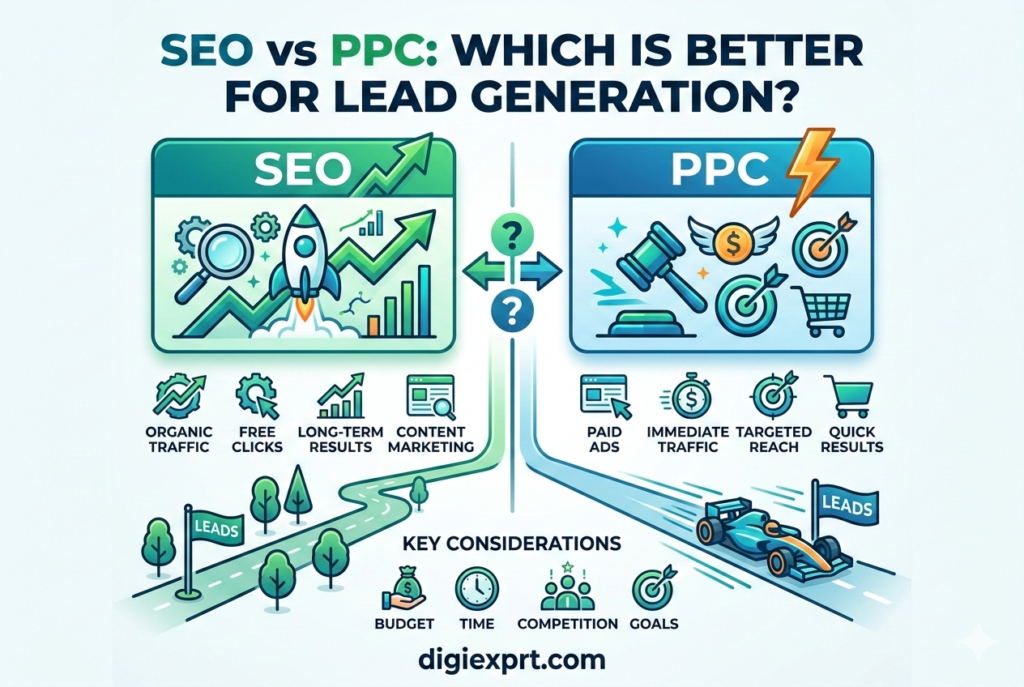
SEO vs PPC for lead generation refers to comparing organic search optimization (SEO) and paid advertising (PPC) to attract potential customers. SEO builds long-term traffic through rankings, while PPC generates immediate leads through paid ads. The best choice depends on budget, timeline, and business goals.
Table of Contents
- What is SEO?
- What is PPC?
- Key Differences Between SEO and PPC
- SEO for Lead Generation: Benefits & Challenges
- PPC for Lead Generation: Benefits & Challenges
- Cost Comparison Table
- When Should You Choose SEO?
- When Should You Choose PPC?
- Best Strategy: Combining SEO + PPC
- Beginner-Friendly Lead Generation Checklist
- FAQs
What is SEO?
Search Engine Optimization (SEO) is the process of improving your website so it ranks higher on search engines like Google organically — without paying for clicks.
SEO focuses on:
- High-quality content
- Keyword optimization
- Technical website improvements
- Backlinks and authority
- User experience
When done correctly, SEO brings consistent and sustainable leads over time.
What is PPC?
Pay-Per-Click (PPC) advertising allows businesses to place paid ads on search engines and pay only when someone clicks.
Common PPC platforms include:
- Google Ads
- Bing Ads
- Social media advertising
PPC works instantly — your website can appear at the top of search results within hours.
Key Differences Between SEO and PPC
| Factor | SEO | PPC |
|---|---|---|
| Traffic Speed | Slow but steady | Immediate |
| Cost Model | Long-term investment | Pay per click |
| Sustainability | Long-lasting | Stops when budget ends |
| Trust Level | Higher user trust | Ad-labeled results |
| Testing | Slower insights | Fast data feedback |
| Lead Cost Over Time | Decreases | Often increases |
SEO for Lead Generation: Benefits & Challenges
Benefits of SEO
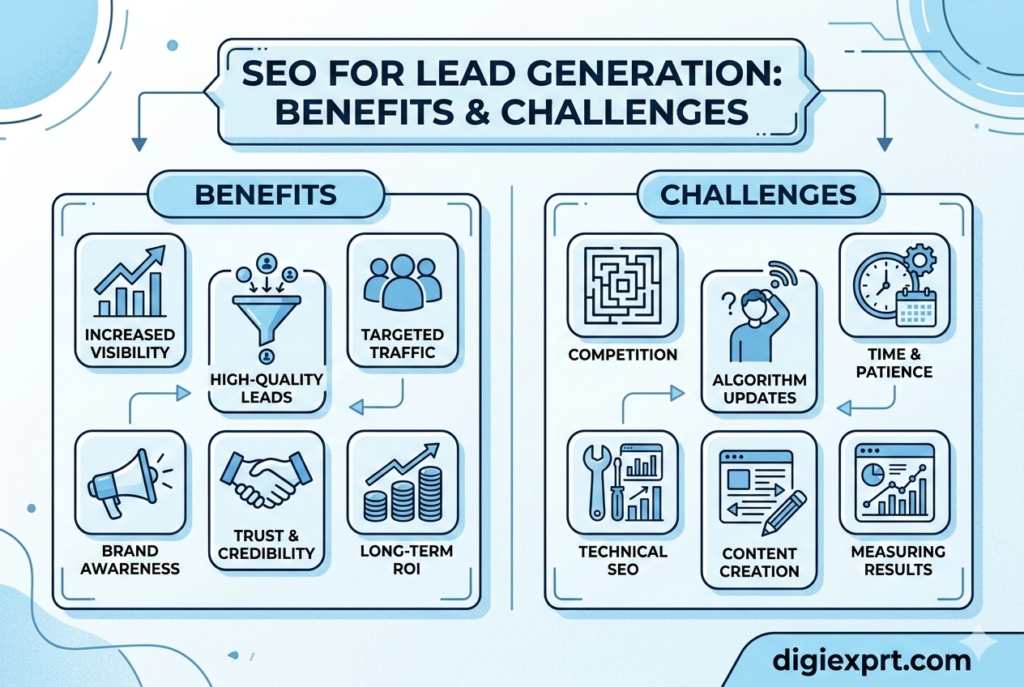
- Builds long-term brand authority
- Generates consistent organic leads
- Lower cost per lead over time
- Improves website credibility
- Works 24/7 without ad spend
Challenges of SEO
- Takes time (3–6 months typically)
- Requires content strategy
- Needs ongoing optimization
SEO is ideal for businesses focused on long-term growth and inbound marketing.
If you’re learning how to build sustainable traffic systems, structured education like a practical digital marketing training program can help understand real-world SEO implementation. Many learners explore the
👉 digital marketing course in dehradun: https://digiexprt.com/
to gain hands-on experience with SEO strategies used by actual businesses.
PPC for Lead Generation: Benefits & Challenges
Benefits of PPC
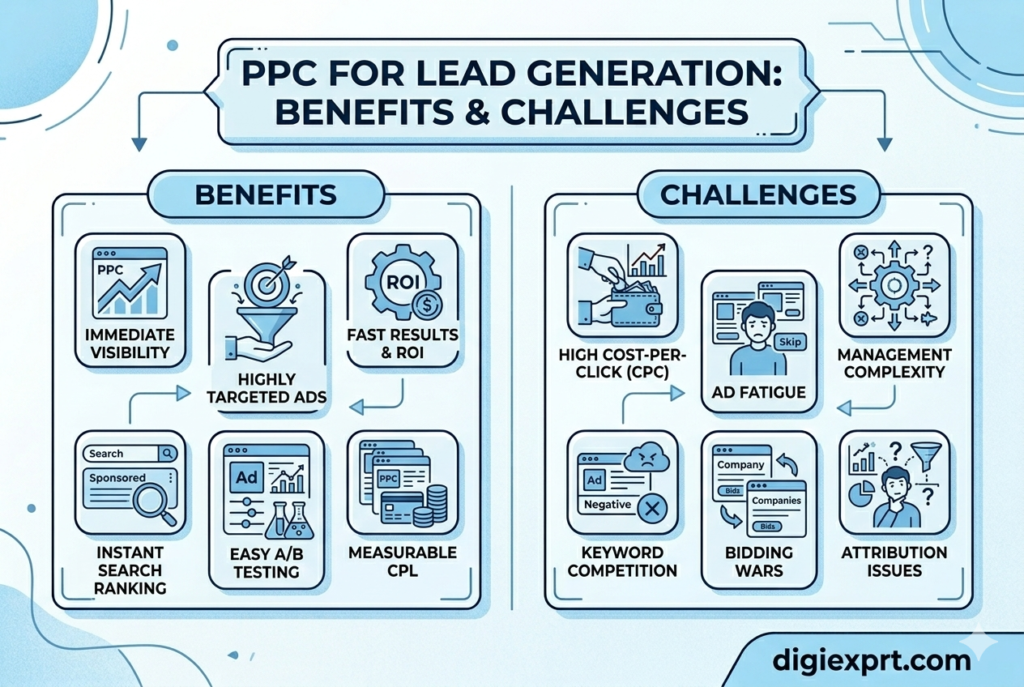
- Instant visibility
- Highly targeted audiences
- Easy campaign testing
- Predictable traffic volume
- Great for promotions or launches
Challenges of PPC
- Costs increase with competition
- Leads stop when ads pause
- Requires continuous optimization
- Can become expensive without expertise
PPC is perfect when you need:
- Immediate leads
- Product launches
- Seasonal campaigns
- Quick market validation
Cost Comparison: SEO vs PPC for Leads
| Aspect | SEO | PPC |
|---|---|---|
| Initial Investment | Medium | Flexible |
| Monthly Cost | Content + optimization | Ad budget required |
| Long-Term ROI | High | Moderate |
| Lead Stability | Strong | Budget-dependent |
| Scalability | Gradual | Instant scaling |
When Should You Choose SEO?
Choose SEO if:
- You want sustainable lead flow
- Budget is limited long-term
- You aim to build brand authority
- Your industry relies on trust
- You focus on inbound marketing
SEO works especially well for:
- Local services
- Education businesses
- Consultants
- Agencies
- SaaS companies
When Should You Choose PPC?
Choose PPC if:
- You need leads immediately
- Launching a new business
- Testing new offers
- Running limited-time promotions
- Competing in high-demand niches
PPC is commonly used by:
- E-commerce brands
- Event promotions
- Real estate campaigns
- Coaching programs
Best Strategy: Combining SEO + PPC
The smartest marketers rarely choose only one.
Instead, they combine both:
SEO handles long-term growth
PPC captures immediate opportunities
How the Hybrid Strategy Works
- Use PPC to test keywords that convert.
- Build SEO content around winning keywords.
- Reduce ad spending gradually as organic rankings grow.
- Retarget visitors using paid ads.
Professionals learning modern marketing strategies often discover this integrated approach through structured programs like the Digiexprt digital marketing course, which teaches how organic and paid channels support each other instead of competing.
Beginner-Friendly Lead Generation Checklist
✅ Define your target audience
✅ Research search intent keywords
✅ Create helpful content pages
✅ Optimize website speed & mobile UX
✅ Set up Google Analytics & tracking
✅ Test PPC campaigns with small budgets
✅ Build landing pages for conversions
✅ Track cost per lead (not just traffic)
✅ Improve content based on user behavior
✅ Combine SEO learning with practical digital marketing training
Common Mistakes Businesses Make
- Expecting SEO results overnight
- Running PPC without conversion tracking
- Ignoring landing page optimization
- Targeting broad keywords only
- Stopping SEO too early
Lead generation success depends more on strategy consistency than channel choice.
FAQs
1. Is SEO better than PPC for lead generation?
SEO is better for long-term leads, while PPC is better for immediate results. The best approach often combines both strategies.
2. How long does SEO take to generate leads?
SEO typically starts showing results within 3–6 months depending on competition and content quality.
3. Is PPC expensive for small businesses?
It can be, but controlled budgets and targeted keywords help manage costs effectively.
4. Which has better ROI: SEO or PPC?
SEO generally provides higher ROI over time, while PPC offers faster short-term returns.
5. Can SEO and PPC work together?
Yes. PPC helps test keywords quickly, and SEO builds long-term rankings for those keywords.
6. Should beginners start with SEO or PPC?
Beginners often start with PPC for quick insights while building SEO simultaneously.
7. Does SEO still work in 2026?
Yes. High-quality, helpful content remains one of the strongest sources of sustainable traffic.
8. Do I need professional training for SEO or PPC?
Structured learning shortens the trial-and-error phase and helps avoid costly mistakes.