

How to Do Digital Marketing: Step-by-Step Beginner Guide
Last updated on January 6th, 2026 at 10:49 pm
Digital marketing has become essential for businesses, freelancers, and even students who want to grow online. But beginners often feel confused: Where do I start? Which channel should I learn first? How do I actually do digital marketing step by step?
This guide answers all of that in a simple, practical way. By the end, you’ll have a clear roadmap you can actually follow.
What Is Digital Marketing?
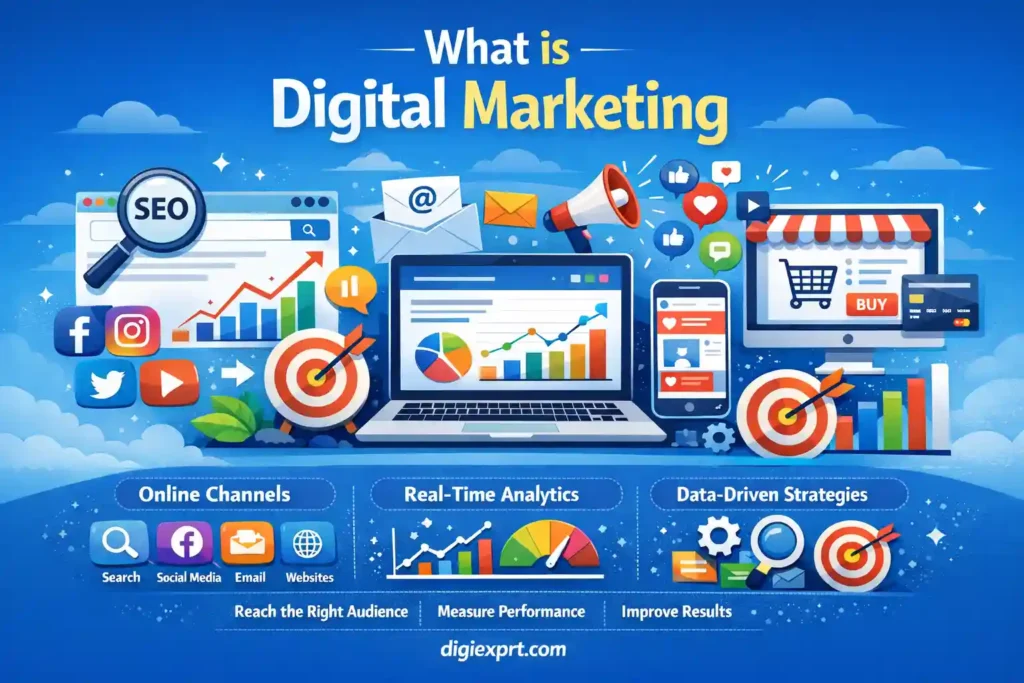
Digital marketing is the process of promoting products or services using online channels such as search engines, social media, email, and websites. It focuses on reaching the right audience, measuring performance in real time, and improving results through data-driven strateg
Why Learning Digital Marketing Matters Today
People search, shop, and interact online more than ever. Businesses follow attention—and attention is digital. Knowing how to do digital marketing helps you:
- Grow a business without huge budgets
- Build a career with in-demand skills
- Reach targeted audiences faster
- Measure results clearly and improve
Whether you want a job, freelancing income, or business growth, digital marketing is a practical skill—not theory.
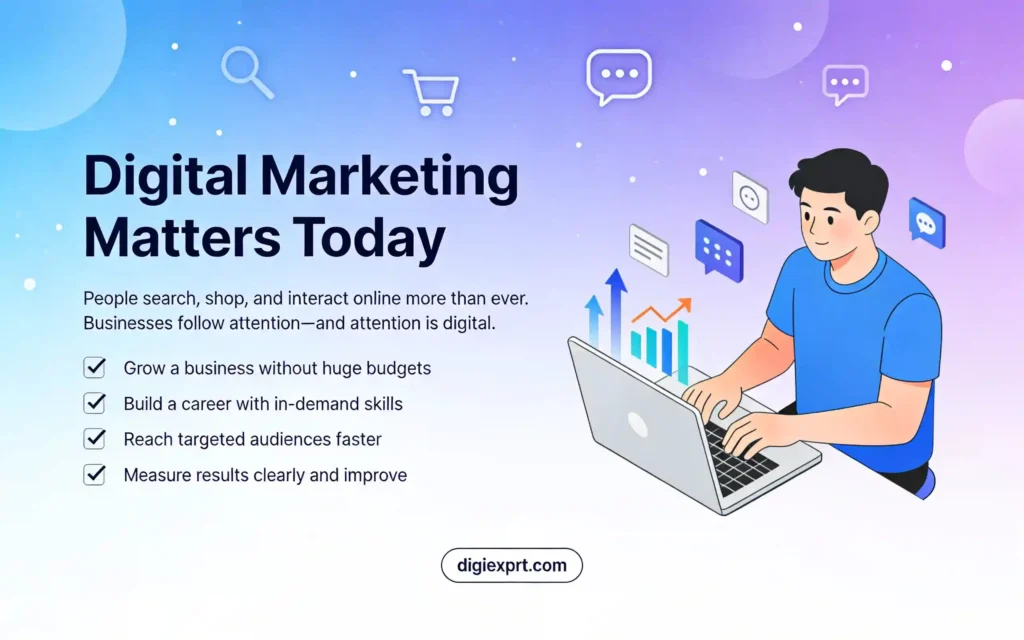
Table of Contents
- Understanding the Basics of Digital Marketing
- Digital Marketing Channels Explained
- How to Create a Digital Marketing Strategy
- Step-by-Step: How to Do Digital Marketing
- Digital Marketing Tools You Should Know
- Beginner-Friendly Digital Marketing Checklist
- Common Mistakes Beginners Should Avoid
- FAQs
- FAQ Schema (HTML)
Understanding the Basics of Digital Marketing
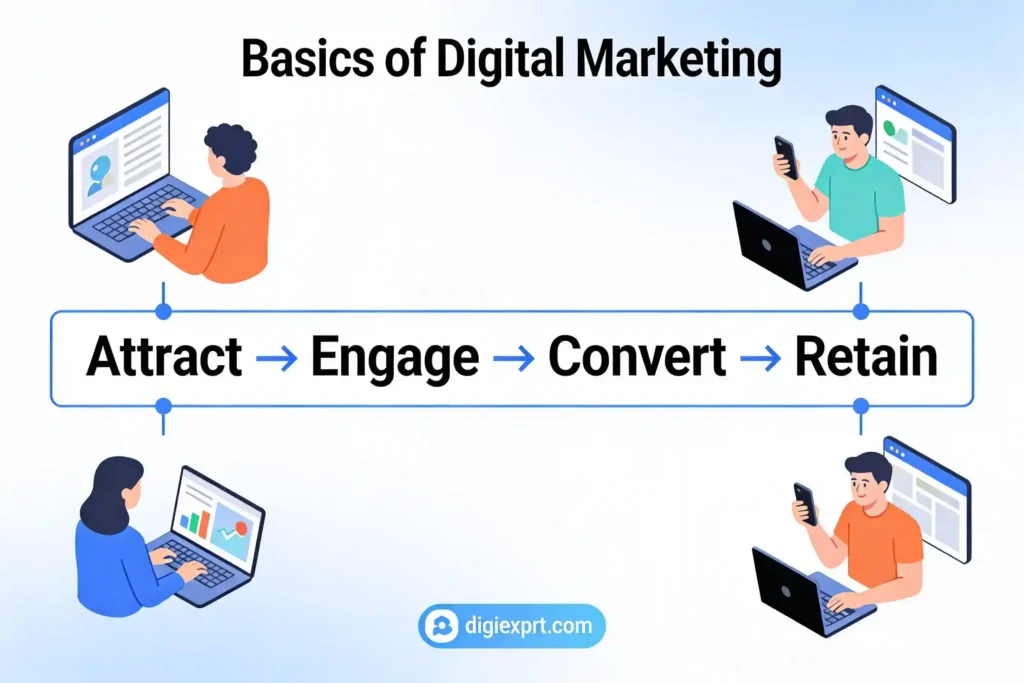
Digital marketing is not one single thing. It’s a combination of strategies that work together. The goal is always the same:
Attract → Engage → Convert → Retain
You attract users, engage them with valuable content, convert them into leads or customers, and retain them with trust and communication.
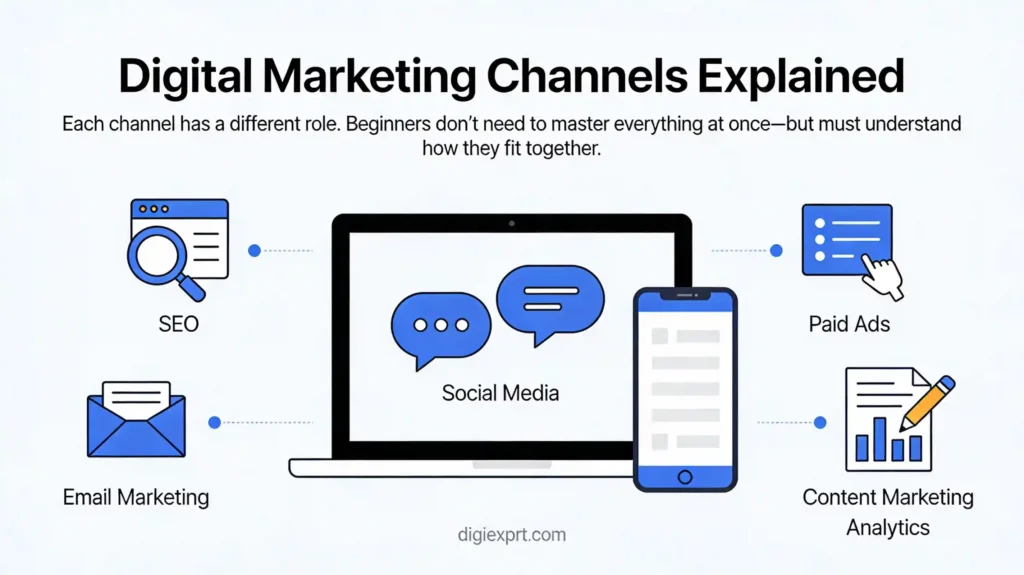
Digital Marketing Channels Explained
Each channel has a different role. Beginners don’t need to master everything at once—but must understand how they fit together.
Search Engine Optimization (SEO)
SEO helps your website rank on Google organically. It focuses on:
- Keyword research
- On-page optimization
- Technical SEO
- Content quality
SEO is slow but long-term and cost-effective.
Search Engine Marketing (Paid Ads)
This includes Google Ads and other paid search campaigns. You pay for visibility and traffic. It’s fast, measurable, and ideal for quick results.
Social Media Marketing
Platforms like Instagram, Facebook, LinkedIn, and YouTube help you:
- Build brand awareness
- Engage with users
- Drive traffic
Organic + paid social together work best.
Content Marketing
Blogs, videos, infographics, and guides educate users and build trust. Content is the backbone of SEO and social media.
Email Marketing
Email helps nurture leads and retain customers through newsletters, offers, and updates. It has one of the highest ROI when done right.
How to Create a Digital Marketing Strategy
Before execution, you need clarity.
Define Your Goal
Ask:
- Do I want traffic?
- Leads?
- Sales?
- Brand awareness?
One primary goal keeps your strategy focused.
Understand Your Audience
Know:
- Age group
- Interests
- Problems
- Platforms they use
Marketing works best when it solves a real problem.
Choose the Right Channels
You don’t need all channels. For example:
- Local business → SEO + Google Ads
- Personal brand → Content + Social media
- E-commerce → Paid ads + Email
How to Do Digital Marketing ?
This is the practical roadmap beginners need.
Step 1: Learn the Fundamentals
Understand how SEO, ads, content, and analytics work together. A structured learning path helps here. Many beginners prefer joining a practical digital marketing training program to avoid confusion and random learning.
Step 2: Build an Online Presence
You need at least:
- A basic website or landing page
- Social media profiles
This becomes your testing ground.
Step 3: Start with One Channel
Don’t do everything at once.
- SEO learners → start blogging
- Social media learners → focus on one platform
- Ads learners → start with small budgets
Depth beats breadth.
Step 4: Create Useful Content
Content should:
- Solve problems
- Answer questions
- Be easy to read
Avoid copying. Original, helpful content builds trust and rankings.
Step 5: Track and Improve
Use analytics to see:
- What works
- What doesn’t
- Where users drop off
Digital marketing improves through testing, not guessing.
If you want guided practice, many learners choose a digital marketing course in dehradun that focuses on real tools and live projects rather than theory alone.
Digital Marketing Tools You Should Know
| Purpose | Tools Examples |
|---|---|
| SEO | Google Search Console, keyword tools |
| Analytics | Google Analytics |
| Social Media | Scheduling & insights tools |
| Email marketing platforms | |
| Ads | Google Ads Manager |
You don’t need paid tools initially. Free tools are enough to start.
Beginner-Friendly Digital Marketing Checklist
Use this checklist to stay focused:
- ✅ Learn core concepts first
- ✅ Pick one digital marketing channel
- ✅ Build a basic website or profile
- ✅ Create consistent content
- ✅ Track performance weekly
- ✅ Improve based on data
- ✅ Avoid shortcuts or fake promises
Following this checklist keeps beginners from feeling overwhelmed.
Common Mistakes Beginners Should Avoid
- Trying all channels at once
- Expecting instant results from SEO
- Ignoring analytics
- Copying competitors blindly
- Not investing in learning or practice
Digital marketing rewards patience and consistency.
Learning Digital Marketing the Right Way
Self-learning is possible, but structured guidance saves time. A practical Digiexprt digital marketing course focuses on real-world skills like SEO audits, ad setup, and content strategy—helping learners move from theory to execution confidently.
FAQs
1. Is digital marketing suitable for beginners?
Yes. Digital marketing is beginner-friendly if you follow a step-by-step approach and focus on one channel at a time.
2. How long does it take to learn digital marketing?
Basics can be learned in 2–3 months, but practical mastery takes continuous practice and real projects.
3. Do I need technical skills for digital marketing?
No advanced coding is required. Basic website understanding and tool usage are enough.
4. Can I do digital marketing without a website?
You can start with social media, but a website is important for long-term growth and SEO.
5. Which digital marketing channel is best to start with?
SEO or social media are best for beginners because they teach fundamentals of audience behavior and content.
6. Is digital marketing a good career option?
Yes. Demand for skilled digital marketers is growing across industries.
7. Can I learn digital marketing offline?
Yes. Classroom-based programs combined with live practice can be very effective.