

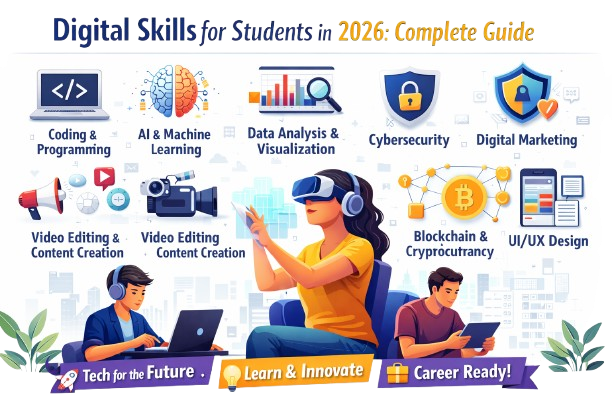
Digital Skills for Students in 2026: Complete Guide
Last updated on April 9th, 2026 at 07:36 am
Technology is reshaping careers faster than ever. Whether you’re in school, college, or preparing for competitive exams, building the right digital skillset is no longer optional—it’s essential.
In this complete guide, you’ll learn what Digital Skills for Students in 2026 really mean, which skills matter most, and how to start building them today.
What Are Digital Skills for Students in 2026?
Digital skills for students in 2026 refer to the practical abilities required to use technology effectively for learning, communication, career growth, and problem-solving. These include digital literacy, coding, data analysis, AI awareness, cybersecurity basics, and digital marketing—combined with soft skills like collaboration and adaptability.
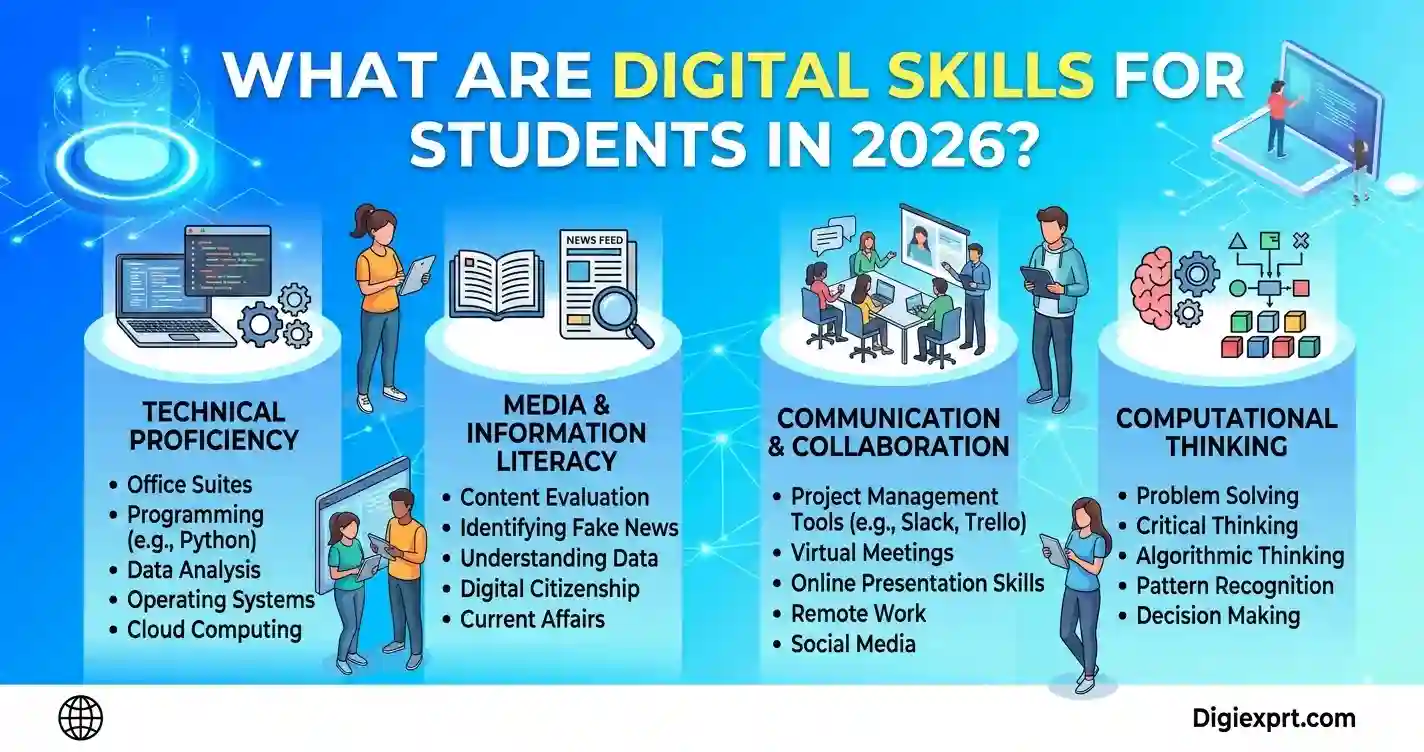
Table of Contents
- Why Digital Skills Matter in 2026
- Core Digital Skills Every Student Must Learn
- Technical Skills vs Soft Digital Skills
- Most In-Demand Digital Skills in 2026
- Skill Comparison Table
- Step-by-Step Learning Roadmap
- Beginner-Friendly Digital Skills Checklist
- FAQs
Why Digital Skills Matter in 2026
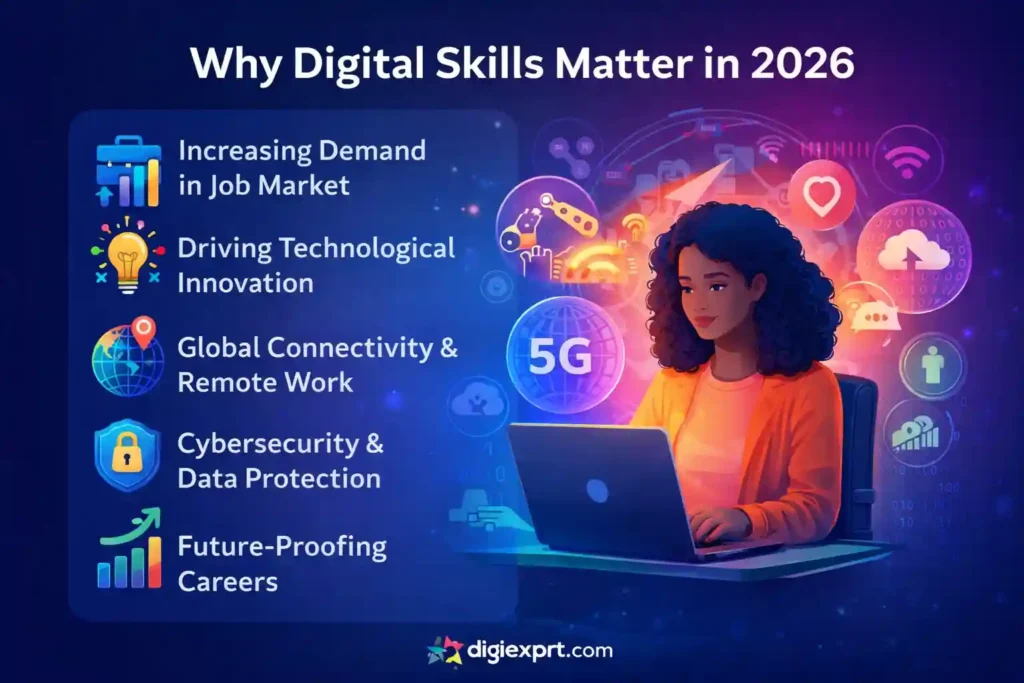
The job market is evolving rapidly:
- Remote work is normal
- AI tools are integrated into daily tasks
- Businesses depend on online presence
- Data drives decision-making
Students who understand digital tools early gain:
- Better internships
- Freelancing opportunities
- Higher employability
- Stronger academic performance
Today, digital skills are just as essential as basic reading and writing abilities.
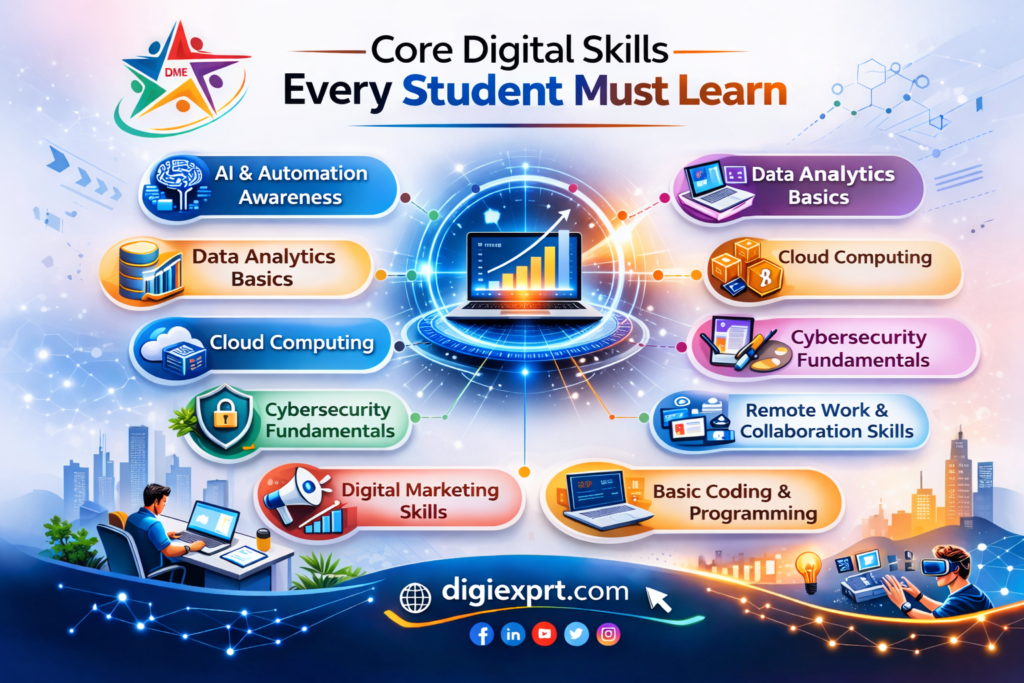
Core Digital Skills Every Student Must Learn
1. Digital Literacy
Digital literacy means understanding how to use:
- Search engines effectively
- Online collaboration tools
- Cloud storage platforms
- Basic troubleshooting
Students must learn how to evaluate online information critically.
2. Basic Coding & Programming
Coding builds logical thinking and problem-solving skills.
Popular beginner languages:
- Python
- JavaScript
- HTML & CSS
Even non-technical students benefit from understanding how software works.
3. AI & Automation Awareness
AI tools are part of daily workflows in 2026.
Students should learn:
- How AI tools assist productivity
- Ethical AI usage
- Prompt writing basics
- Automation concepts
AI is not replacing students—it’s enhancing productivity.
4. Data Analytics Basics
Data is everywhere.
Basic data skills include:
- Reading spreadsheets
- Understanding charts
- Basic Excel or Google Sheets
- Data interpretation
Even marketing, finance, and HR roles require data literacy.
5. Digital Marketing Skills
Every brand operates online. Understanding:
- Social media marketing
- SEO fundamentals
- Content creation
- Email marketing
can open freelance, internship, and startup opportunities.
If students want structured guidance, enrolling in a practical digital marketing course in dehradun can provide real-world exposure, live projects, and mentorship.
6. Cybersecurity Fundamentals
Students must understand:
- Strong password management
- Phishing awareness
- Data privacy basics
- Safe browsing habits
Digital safety is now a life skill.
7. Remote Work & Collaboration Skills
Modern teams use:
- Zoom
- Slack
- Google Workspace
- Project management tools
Knowing how to communicate online professionally is critical.
Technical Skills vs Soft Digital Skills
Both matter equally.
| Technical Digital Skills | Soft Digital Skills |
|---|---|
| Coding basics | Communication |
| SEO & analytics | Adaptability |
| AI tool usage | Critical thinking |
| Spreadsheet analysis | Team collaboration |
| Cybersecurity basics | Time management |
Students who combine both stand out in interviews.
Most In-Demand Digital Skills in 2026
AI & Machine Learning Literacy
Not deep programming—but understanding how AI works.
Digital Marketing & Personal Branding
Every professional needs an online presence.
Many students prefer structured digital marketing training programs to gain hands-on experience with live tools.
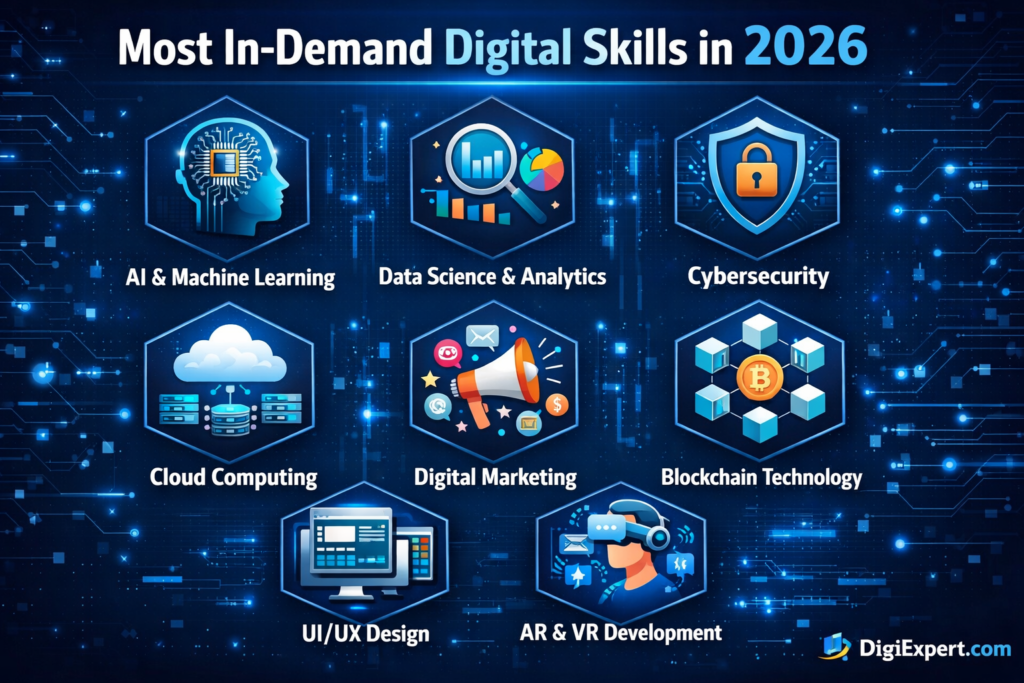
Data Interpretation
Businesses rely on data-based decisions.
Content Creation & Video Editing
Short-form video platforms continue to grow.
No-Code & Low-Code Tools
Building websites or apps without heavy coding is trending.
Step-by-Step Roadmap to Build Digital Skills
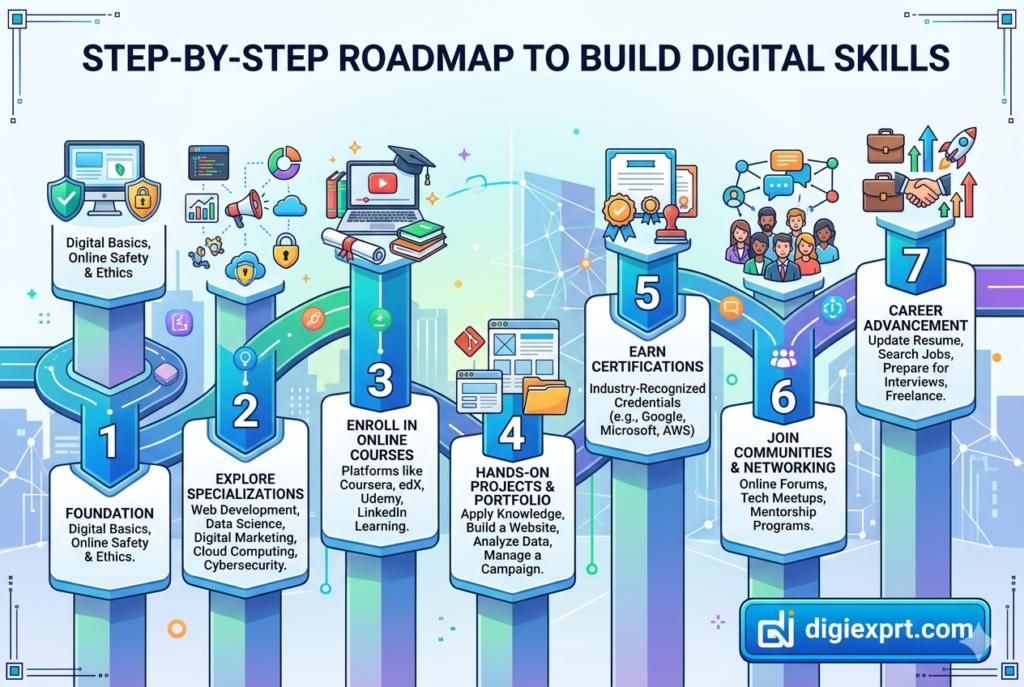
Step 1: Start with Digital Literacy
Master online research, email etiquette, and productivity tools.
Step 2: Choose One Core Skill
Pick one:
- Coding
- Digital marketing
- Data analysis
- Design
Avoid learning everything at once.
Step 3: Practice with Projects
Create:
- A blog
- A portfolio
- A social media page
- A mini website
Step 4: Learn from Structured Programs
Self-learning is great, but mentorship accelerates growth.
For example, theDigiexprt digital marketing course offers practical exposure for students wanting job-ready skills.
Step 5: Build an Online Portfolio
Use:
- GitHub
- Personal website
Show skills, not just certificates.
Beginner-Friendly Digital Skills Checklist
Use this checklist to track your progress:
✅ Foundation Level
- Create professional email ID
- Learn Google Docs & Sheets
- Understand online safety basics
- Use cloud storage
✅ Intermediate Level
- Build a simple website
- Run a basic ad campaign
- Analyze spreadsheet data
- Use AI productivity tools
✅ Advanced Level
- Complete 3 real projects
- Build online portfolio
- Do internship or freelancing
- Learn personal branding
Consistency matters more than speed.
Common Mistakes Students Should Avoid
- Learning too many skills at once
- Focusing only on theory
- Ignoring soft skills
- Not building real projects
- Avoiding internships
Digital skills grow with practice, not just watching tutorials.
How to Choose the Right Digital Skill?
Ask yourself:
- Do I enjoy creative tasks? → Try digital marketing or design
- Do I enjoy logic and numbers? → Try coding or data analytics
- Do I enjoy communication? → Try content or branding
Skill-building should match your interest and long-term goals.
FAQs
1. What are the most important digital skills for students in 2026?
Digital literacy, AI awareness, coding basics, data analysis, cybersecurity fundamentals, and digital marketing are among the most important skills.
2. Can non-technical students learn digital skills?
Yes. Many digital skills like SEO, content creation, and data interpretation don’t require advanced coding.
3. How long does it take to learn digital skills?
A beginner can develop fundamental proficiency in about 3–6 months if they practice consistently.
4. Are digital marketing skills useful for students?
Yes. They help with freelancing, internships, startup growth, and personal branding.
5. Do I need paid courses to learn digital skills?
Not necessarily. However, structured programs can speed up learning and provide mentorship.
6. Is coding mandatory in 2026?
Not mandatory for all careers, but basic understanding is beneficial.
7. How can I practice digital skills at home?
Work on real projects like blogs, websites, social media pages, or internships.
8. Which digital skill has the highest career growth?
AI-related skills, data analytics, and digital marketing currently show strong career demand trends.