

Digital Marketing Tools
Last updated on March 2nd, 2026 at 12:03 am
Digital marketing tools are essential for planning, executing, managing, and measuring online marketing activities. Whether you are a beginner, business owner, freelancer, or student, the right tools help you work smarter, save time, and make data-driven decisions.
In this guide, you’ll learn what digital marketing tools are, their main types, how to choose the right ones, and how beginners can start without confusion or heavy costs.
What Are Digital Marketing Tools?
Digital marketing tools are software or online platforms that help marketers plan, execute, analyze, and optimize marketing campaigns across digital channels like search engines, social media, email, and websites. They enable better targeting, performance tracking, automation, and decision-making using real-time data.
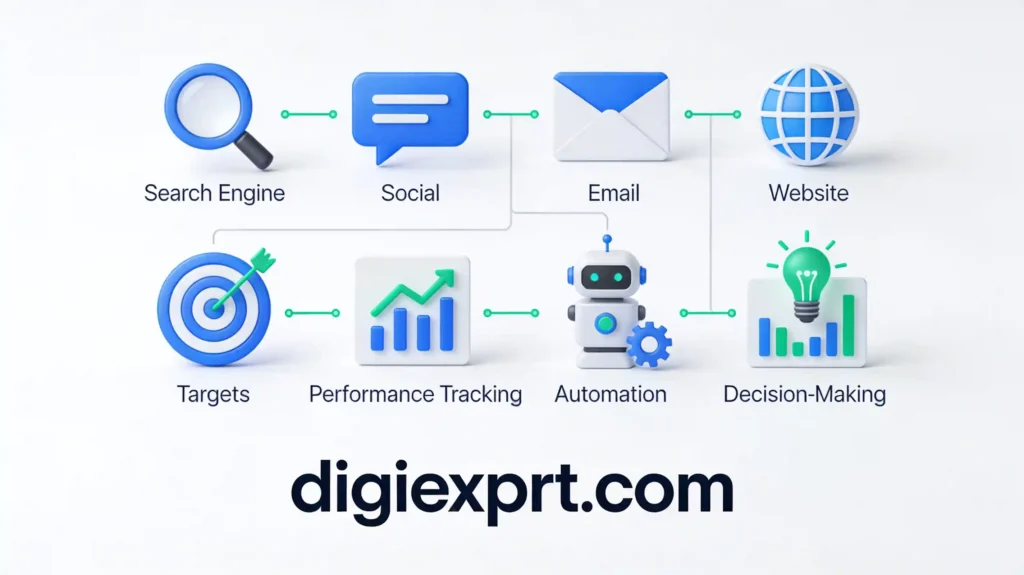
Table of Contents
- Why Digital Marketing Tools Are Important
- Types of Digital Marketing Tools
- SEO Tools
- Social Media Marketing Tools
- Content Marketing Tools
- Email Marketing Tools
- Paid Advertising (PPC) Tools
- Analytics & Reporting Tools
- How to Choose the Right Digital Marketing Tools
- Beginner-Friendly Digital Marketing Tools Checklist
- Comparison Table: Free vs Paid Tools
- FAQs
- FAQ Schema HTML
Why Digital Marketing Tools Are Important
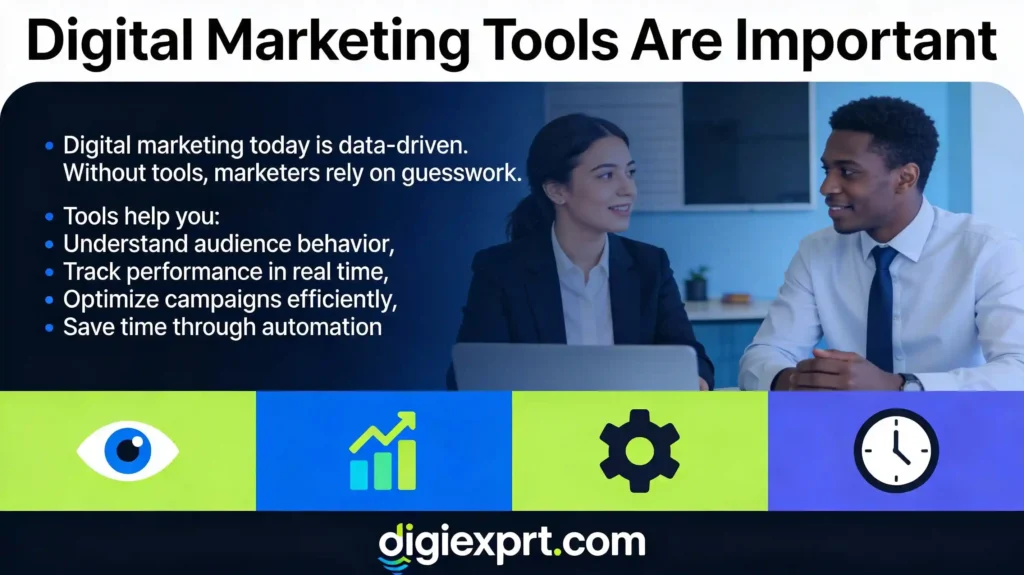
Digital marketing today is data-driven. Without tools, marketers rely on guesswork. Tools help you:
- Understand audience behavior
- Track performance in real time
- Optimize campaigns efficiently
- Save time through automation
- Measure ROI accurately
For anyone learning digital marketing, tools bridge the gap between theory and real-world execution. This is why practical training, such as a digital marketing training program, focuses heavily on tool usage rather than just concepts.
Types of Digital Marketing Tools
Digital marketing tools can be grouped based on their purpose:
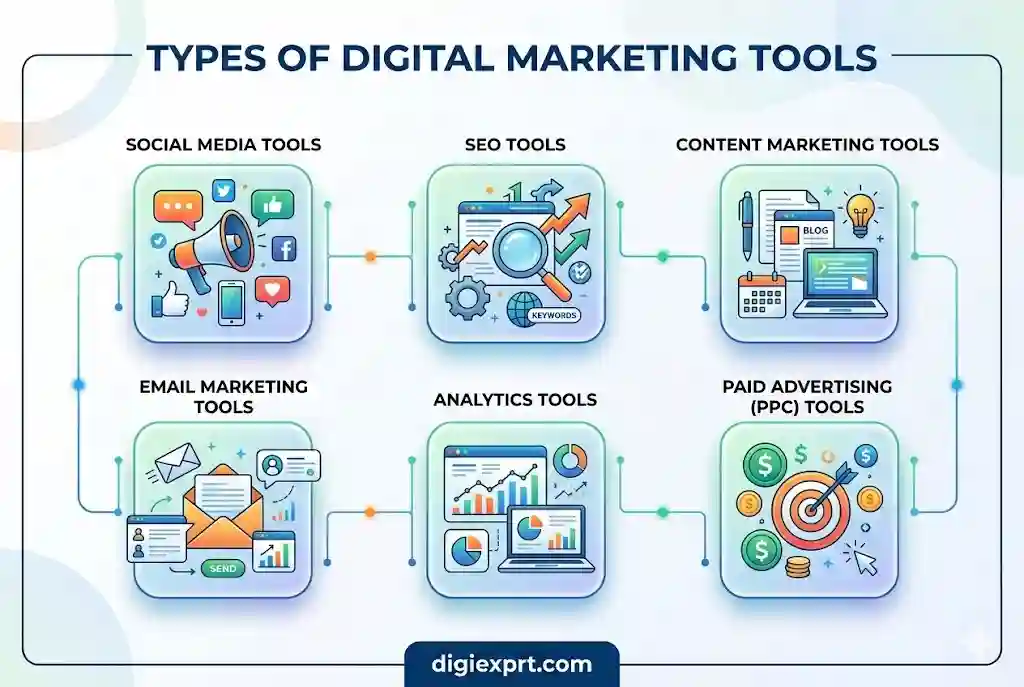
- SEO tools
- Social media tools
- Content marketing tools
- Email marketing tools
- Paid advertising tools
- Analytics and reporting tools
Each category plays a different role but works best when integrated into a single marketing strategy.
SEO Tools
SEO tools help improve website visibility on search engines by analyzing keywords, content, backlinks, and technical performance.
Common Uses of SEO Tools
- Keyword research and search intent analysis
- Technical SEO audits
- On-page optimization
- Backlink monitoring
- Rank tracking
Examples
- Google Search Console
- Google Keyword Planner
- Ahrefs
- SEMrush
- Ubersuggest
Learning SEO tools practically is a core part of any professional Digiexprt digital marketing course, as SEO remains a long-term traffic source for businesses.
Social Media Marketing Tools
Social media marketing tools help manage multiple platforms, schedule posts, track engagement, and analyze audience behavior.
Key Benefits
- Consistent posting
- Time-saving automation
- Performance insights
- Brand monitoring
Examples
- Meta Business Suite
- Hootsuite
- Buffer
- Sprout Social
Content Marketing Tools
Content tools help with planning, creating, optimizing, and managing content across blogs, websites, and social platforms.
What They Help With
- Topic research
- Content optimization
- Grammar and readability
- Visual content creation
Examples
- Google Docs
- Grammarly
- Canva
- Surfer SEO
Email Marketing Tools
Email marketing tools allow businesses to send targeted, personalized messages to subscribers and track performance.
Key Features
- List segmentation
- Automation workflows
- A/B testing
- Open and click tracking
Examples
- Mailchimp
- ConvertKit
- Brevo (Sendinblue)
Paid Advertising (PPC) Tools
PPC tools help run paid campaigns on search engines and social media platforms.
What They Do
- Keyword bidding
- Audience targeting
- Budget control
- Conversion tracking
Examples
- Google Ads
- Facebook Ads Manager
- LinkedIn Campaign Manager
Hands-on practice with PPC tools is crucial, which is why structured programs like a digital marketing course in dehradun include live ad account training.
Analytics & Reporting Tools
Analytics tools track user behavior, traffic sources, and campaign performance.
Why Analytics Matters
- Measure success accurately
- Identify weak points
- Optimize strategies
- Prove ROI to clients or management
Examples
- Google Analytics 4
- Google Looker Studio
- Hotjar
How to Choose the Right Digital Marketing Tools
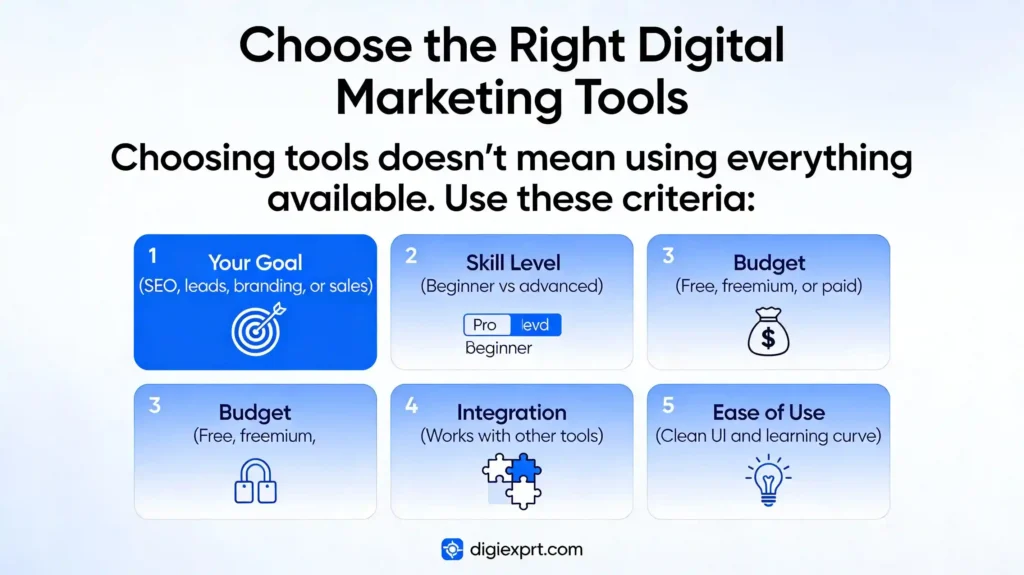
Choosing tools doesn’t mean using everything available. Use these criteria:
- Your Goal – SEO, leads, branding, or sales
- Skill Level – Beginner vs advanced
- Budget – Free, freemium, or paid
- Integration – Works with other tools
- Ease of Use – Clean UI and learning curve
Beginners should start with free tools before upgrading.
Beginner-Friendly Digital Marketing Tools Checklist
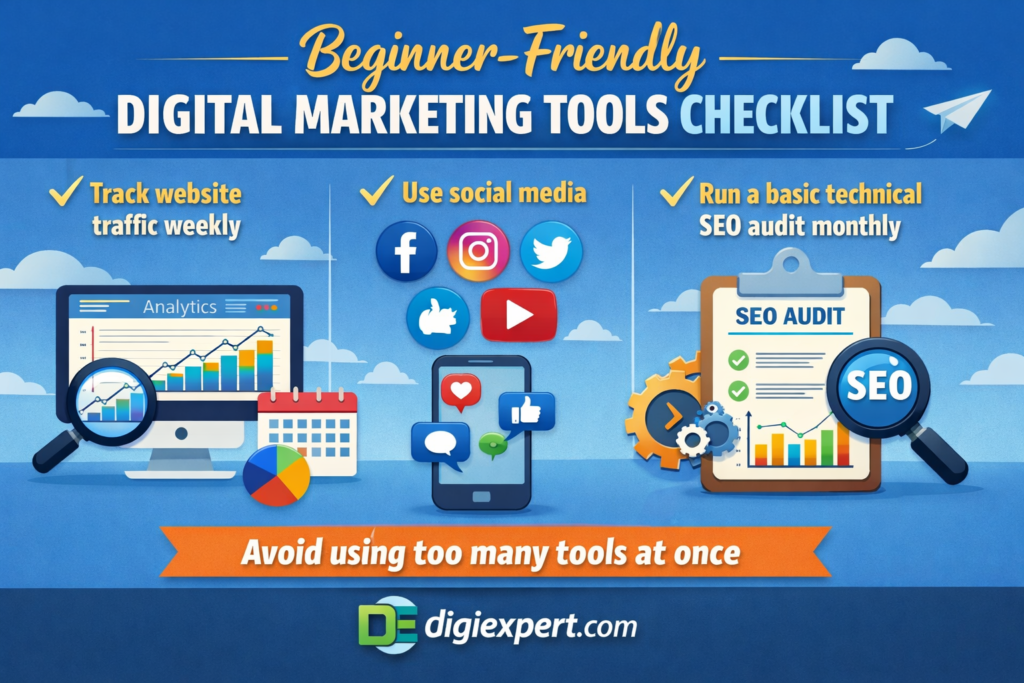
If you are just starting, follow this checklist:
- Use one SEO tool consistently
- Track website traffic weekly
- Schedule social media posts in advance
- Run a basic technical SEO audit monthly
- Learn Google Analytics fundamentals
- Avoid using too many tools at once
This structured approach is taught step-by-step in professional digital marketing training programs to prevent overwhelm.
Comparison Table: Free vs Paid Digital Marketing Tools
| Feature | Free Tools | Paid Tools |
|---|---|---|
| Cost | ₹0 | Monthly/Annual fee |
| Data Depth | Limited | Advanced |
| Automation | Minimal | High |
| Support | Community-based | Dedicated support |
| Best For | Beginners | Agencies & professionals |
FAQs
What are digital marketing tools used for?
Digital marketing tools are used to plan, execute, track, and optimize online marketing campaigns across SEO, social media, email, and paid advertising channels.
Are digital marketing tools free?
Many tools offer free versions, but advanced features usually require paid plans.
Which digital marketing tools should beginners learn first?
Beginners should start with Google Analytics, Google Search Console, keyword research tools, and basic social media scheduling tools.
Do I need coding knowledge to use digital marketing tools?
No. Most tools are user-friendly and designed for non-technical users.
How many tools should I use at once?
It’s best to use only a few essential tools to avoid confusion and focus on learning properly.
Is learning tools more important than theory?
Both are important, but tools help you apply theory practically and build real skills.
Can I learn digital marketing tools without a course?
Yes, but a structured course speeds up learning and avoids trial-and-error mistakes.