

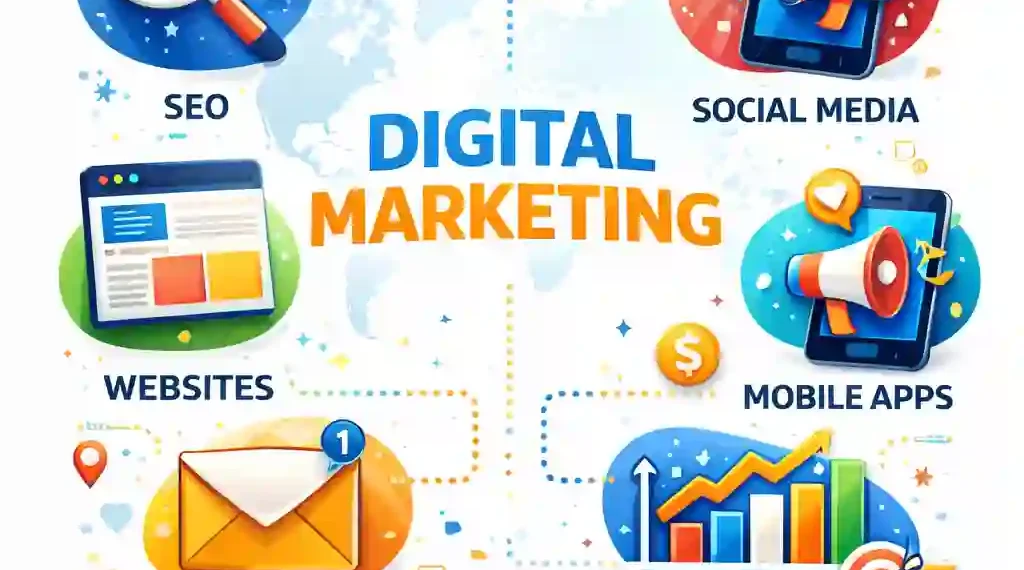
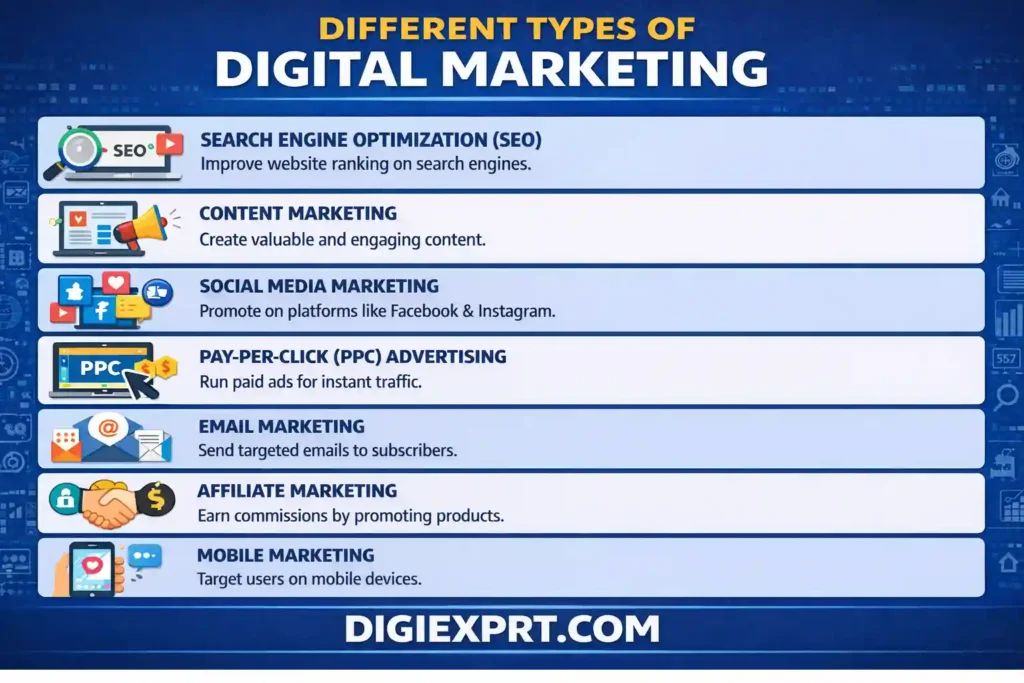
Different Types of Digital Marketing
Last updated on January 4th, 2026 at 10:48 pm
Digital marketing has changed the way businesses connect with customers. Instead of relying only on newspapers, TV, or billboards, brands now use online platforms to reach the right audience at the right time.
If you’re a student, business owner, or job seeker, understanding the different types of digital marketing is the first step toward building a strong online presence or a successful career.
Featured Snippet: What Is Digital Marketing?
Digital marketing refers to promoting products or services using online channels such as search engines, websites, social media, email, and mobile apps. It helps businesses reach targeted audiences, measure performance in real time, and build long-term customer relationships more efficiently than traditional marketing.
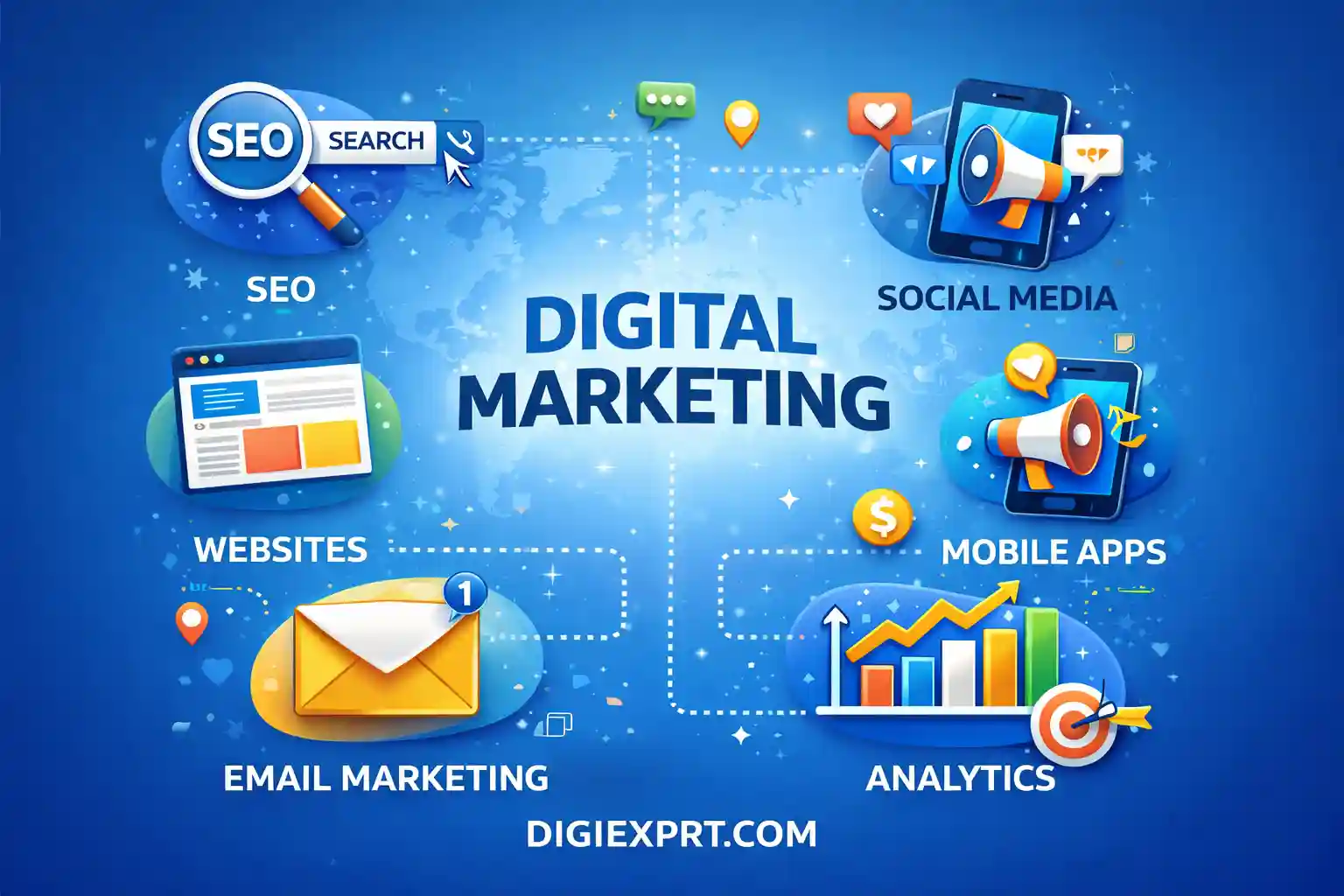
Table of Contents
- What Are the Different Types of Digital Marketing?
- Search Engine Optimization (SEO)
- Content Marketing
- Social Media Marketing (SMM)
- Pay-Per-Click Advertising (PPC)
- Email Marketing
- Affiliate Marketing
- Influencer Marketing
- Mobile Marketing
- Comparison Table: Digital Marketing Types
- Beginner-Friendly Digital Marketing Checklist
- How to Learn Digital Marketing the Right Way
- FAQs
- FAQ Schema (HTML)
What Are the Different Types of Digital Marketing?
Digital marketing includes multiple strategies, each serving a different purpose. Some focus on long-term growth, while others deliver quick results. Smart marketers usually combine several methods for better outcomes.
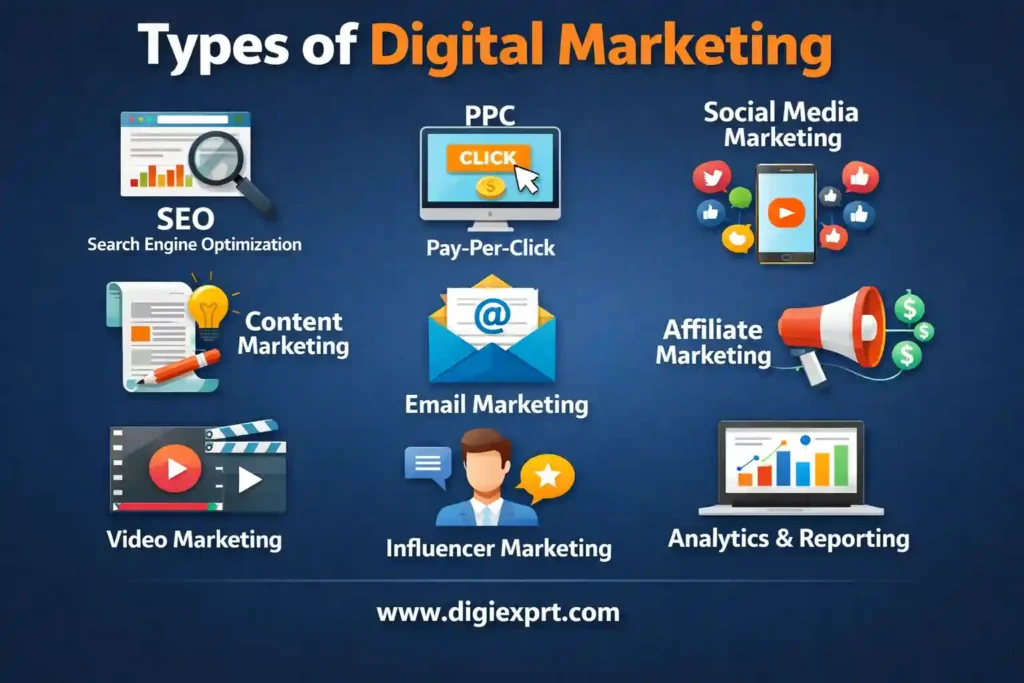
Let’s explore each type in detail.
Search Engine Optimization (SEO)
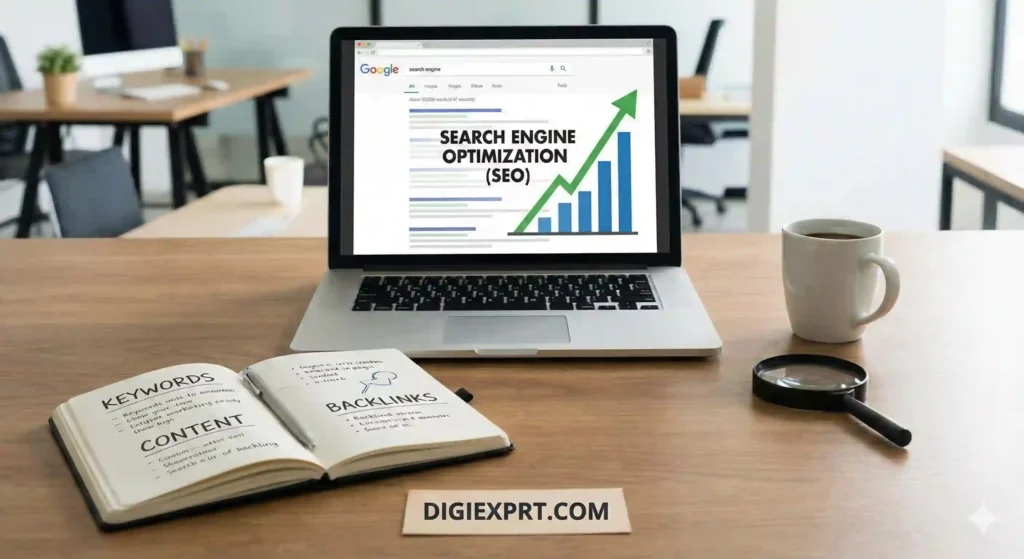
SEO is the process of optimizing a website to rank higher on search engines like Google.
How SEO Works
- Keyword research and optimization
- On-page improvements (content, headings, internal links)
- Technical SEO (site speed, mobile-friendliness)
- Off-page SEO (backlinks, authority building)
Why SEO Matters
- Brings long-term organic traffic
- Builds trust and credibility
- Cost-effective compared to paid ads
SEO is ideal for businesses that want sustainable growth.
Content Marketing
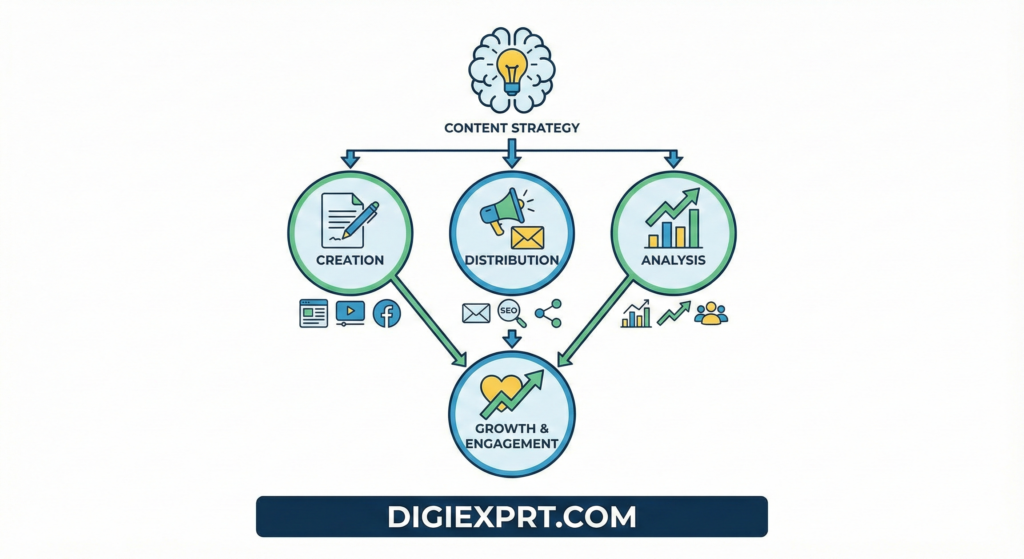
Content marketing focuses on creating valuable, relevant, and helpful content for a specific audience.
Common Content Formats
- Blog posts
- Videos
- Infographics
- Case studies
- E-books
Benefits of Content Marketing
- Educates your audience
- Supports SEO efforts
- Builds brand authority
Good content answers real user questions instead of just selling.
Social Media Marketing (SMM)
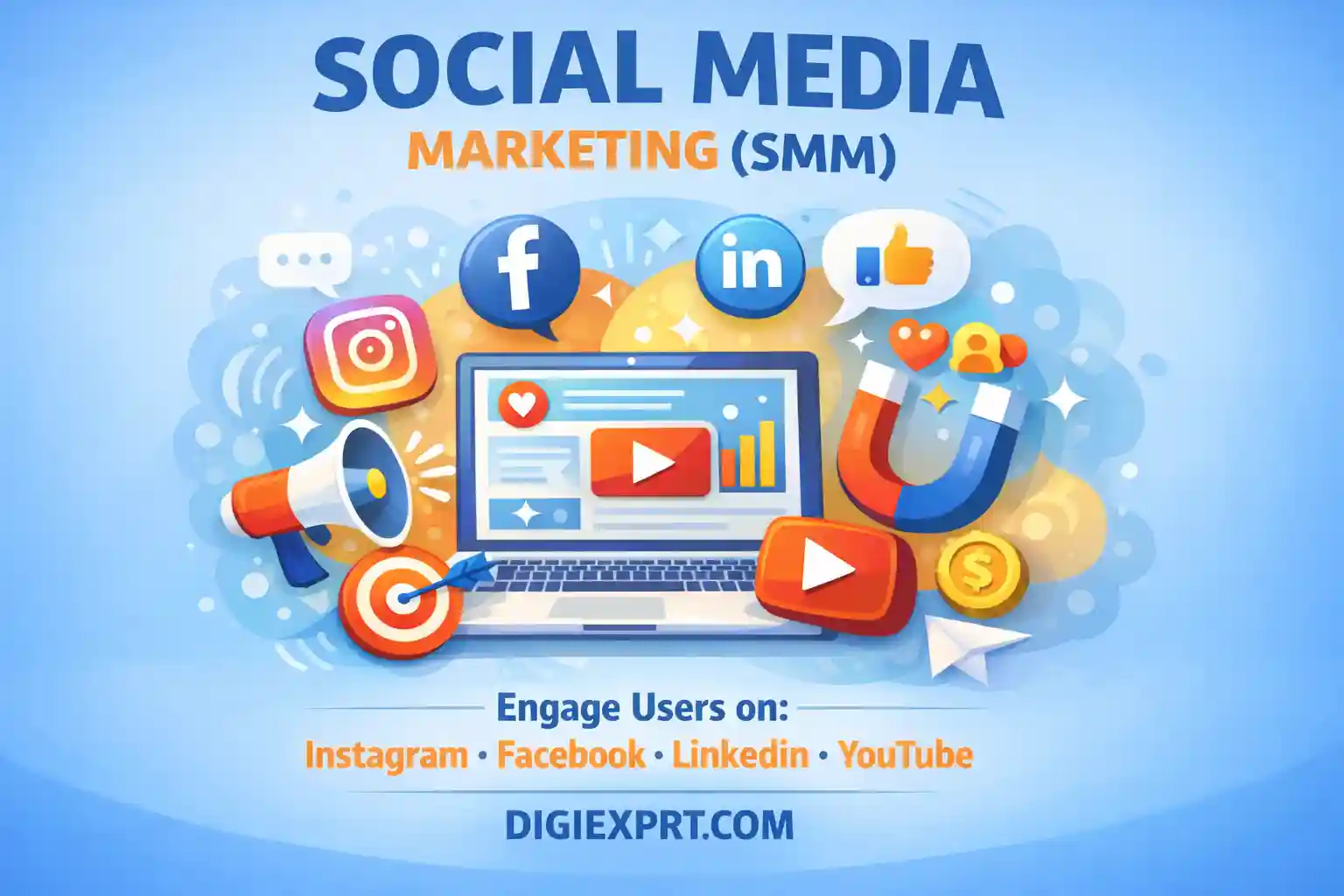
Social media marketing uses platforms like Instagram, Facebook, LinkedIn, and YouTube to engage users.
Key Social Media Activities
- Posting organic content
- Running paid ads
- Community engagement
- Brand storytelling
Why Social Media Is Powerful
- Direct connection with customers
- High engagement potential
- Great for brand awareness
Pay-Per-Click Advertising (PPC)
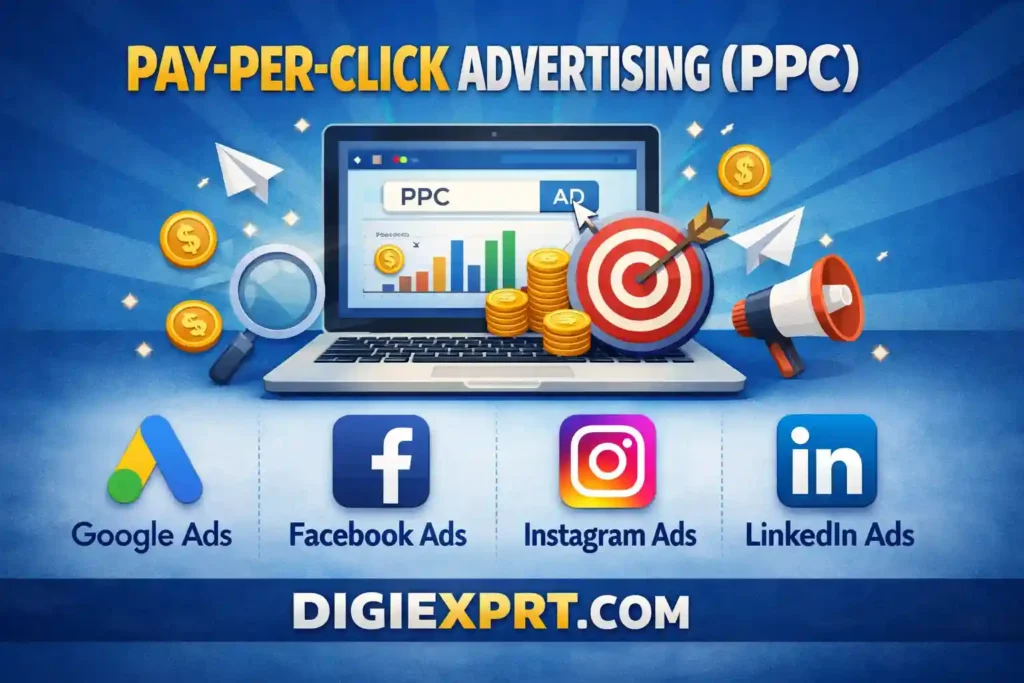
PPC is a paid marketing method where advertisers pay each time someone clicks their ad.
Popular PPC Platforms
- Google Ads
- Facebook Ads
- Instagram Ads
- LinkedIn Ads
When to Use PPC
- For quick traffic
- Product launches
- Lead generation campaigns
PPC delivers fast results but requires proper budget management.
Email Marketing
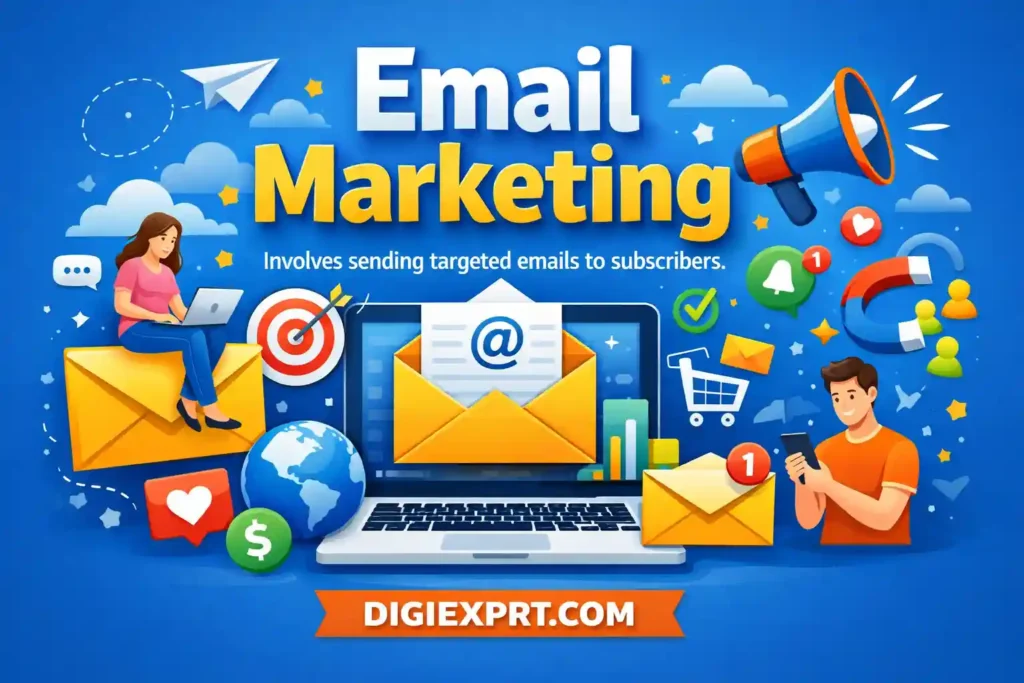
Email marketing involves sending targeted emails to subscribers.
Common Email Types
- Newsletters
- Promotional emails
- Welcome emails
- Abandoned cart emails
Why Email Marketing Works
- High ROI when done right
- Personalized communication
- Builds long-term relationships
Affiliate Marketing
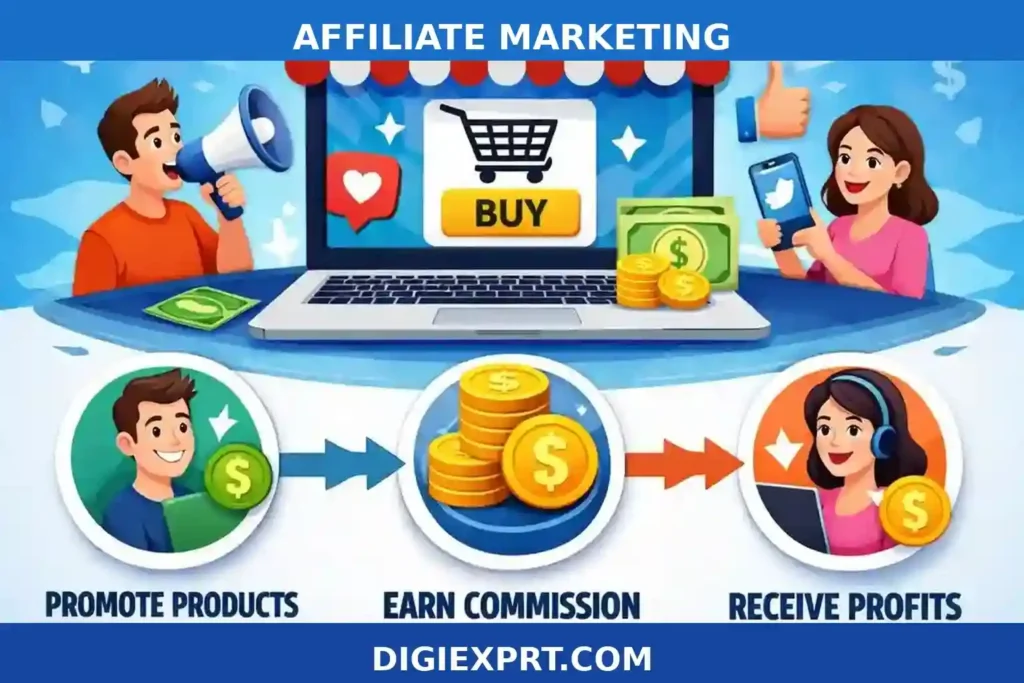
Affiliate marketing allows others to promote your products and earn a commission.
How It Works
- Affiliates share unique links
- They earn when sales happen
- Businesses pay only for results
It’s performance-based and scalable.
Influencer Marketing
Influencer marketing partners with creators who already have audience trust.
Types of Influencers
- Nano influencers
- Micro influencers
- Macro influencers
This strategy works best for lifestyle, fashion, beauty, and local brands.
Mobile Marketing
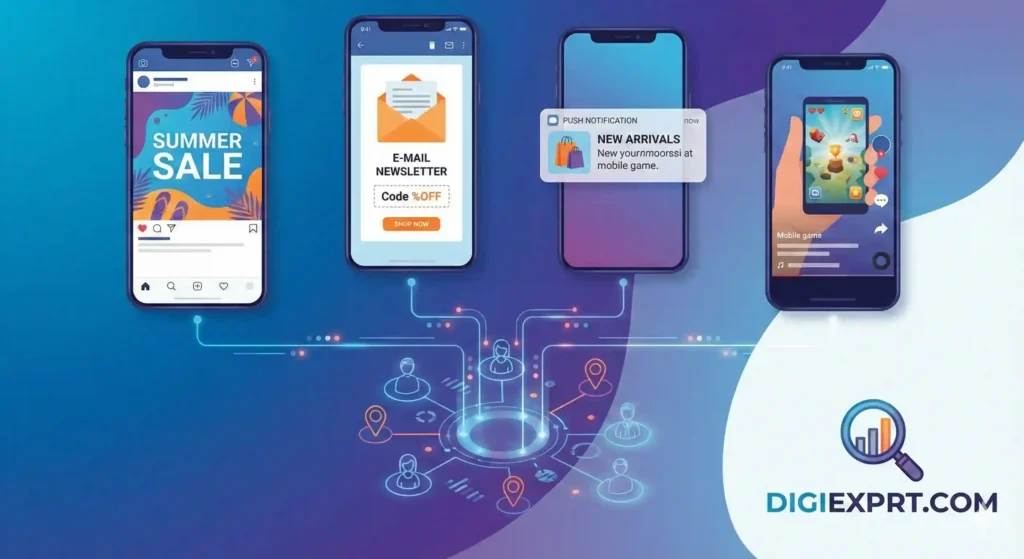
Mobile marketing targets users on smartphones.
Examples
- SMS marketing
- WhatsApp marketing
- Mobile app ads
- Push notifications
With most users on mobile, this channel is highly effective.
Comparison Table: Different Types of Digital Marketing
| Type | Best For | Cost | Results Speed |
|---|---|---|---|
| SEO | Long-term growth | Low | Slow |
| Content Marketing | Authority building | Medium | Slow |
| Social Media | Engagement | Medium | Medium |
| PPC | Instant traffic | High | Fast |
| Email Marketing | Retention | Low | Medium |
| Affiliate Marketing | Sales | Low | Medium |
| Influencer Marketing | Branding | Medium | Fast |
| Mobile Marketing | Local reach | Low | Fast |
Beginner-Friendly Digital Marketing Checklist
If you’re just starting, follow this checklist:
- Understand basic marketing concepts
- Learn SEO fundamentals
- Practice content writing
- Explore social media platforms
- Run small PPC campaigns
- Learn analytics and reporting
- Build real projects
How to Learn Digital Marketing the Right Way
Learning theory alone is not enough. You need practical exposure, tools, and mentorship.
If you’re looking for structured learning, enrolling in a digital marketing course in dehradun can help you gain hands-on experience with real projects. A good digital marketing training program covers SEO, ads, social media, content, and analytics in one roadmap.
Many learners prefer the Digiexprt digital marketing course because it focuses on practical skills, live projects, and industry-relevant tools that prepare you for real jobs or business growth. You can explore their programs here:
👉 https://digiexprt.com/
FAQs
1. What are the main types of digital marketing?
SEO, content marketing, social media marketing, PPC, email marketing, affiliate marketing, influencer marketing, and mobile marketing.
2. Which digital marketing type is best for beginners?
SEO and content marketing are best for beginners due to low cost and strong fundamentals.
3. Is digital marketing good for career growth?
Yes, digital marketing offers high demand, flexible roles, and freelancing opportunities.
4. How long does it take to learn digital marketing?
Basic skills can be learned in 3–6 months with consistent practice.
5. Can small businesses use digital marketing?
Absolutely. Digital marketing is cost-effective and scalable for small businesses.
6. Do I need technical skills for digital marketing?
Basic technical understanding helps, but most tools are beginner-friendly.
7. Is certification important in digital marketing?
Certification helps, but practical skills and experience matter more.