

The Benefits Of Search Engine Marketing (SEM)
Last updated on January 4th, 2026 at 09:28 pm
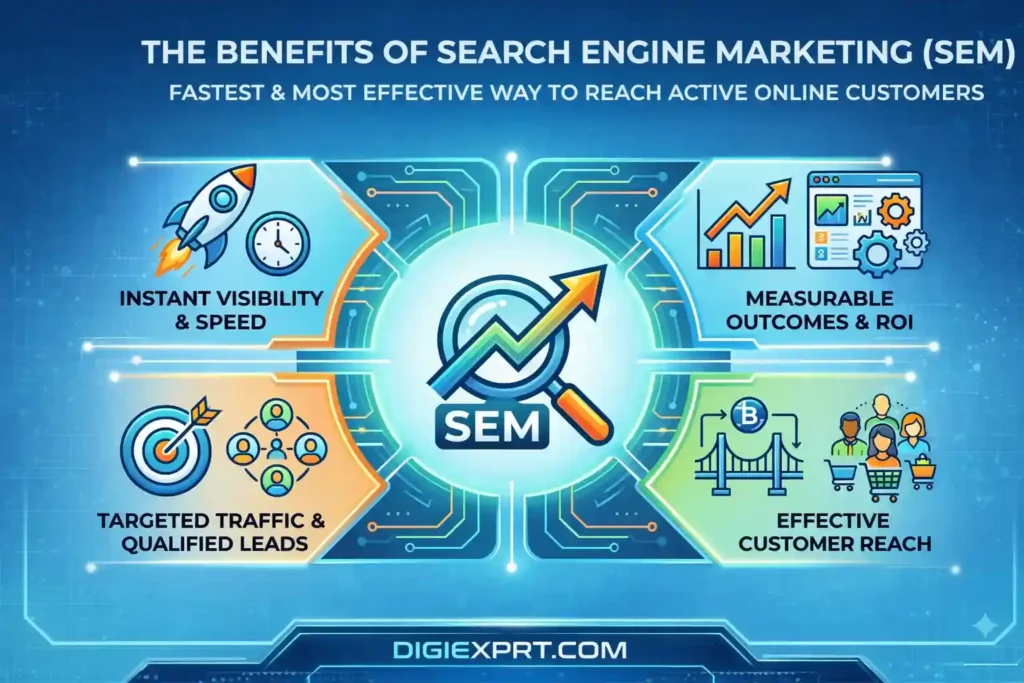
Search Engine Marketing (SEM) has become one of the fastest and most effective ways for businesses to reach customers who are actively searching for products or services online. Unlike organic methods that take time, SEM allows brands to appear instantly at the top of search engine results and drive targeted traffic with measurable outcomes.
In this guide, we’ll explore what SEM is, why it matters, and the real benefits it offers to businesses of all sizes.
Featured Snippet: What is Search Engine Marketing (SEM)?
Search Engine Marketing (SEM) is a paid digital marketing strategy where businesses promote their websites on search engine results pages through ads. It helps brands gain instant visibility, target high-intent users, control budgets, and measure performance using data-driven insights.
Table of Contents
- What Is Search Engine Marketing (SEM)?
- How Search Engine Marketing Works
- Key Benefits of Search Engine Marketing (SEM)
- SEM vs SEO: A Quick Comparison
- Why Businesses Prefer SEM for Faster Results
- Beginner-Friendly SEM Checklist
- Common SEM Mistakes to Avoid
- FAQs on Search Engine Marketing
- Conclusion
What Is Search Engine Marketing (SEM)?
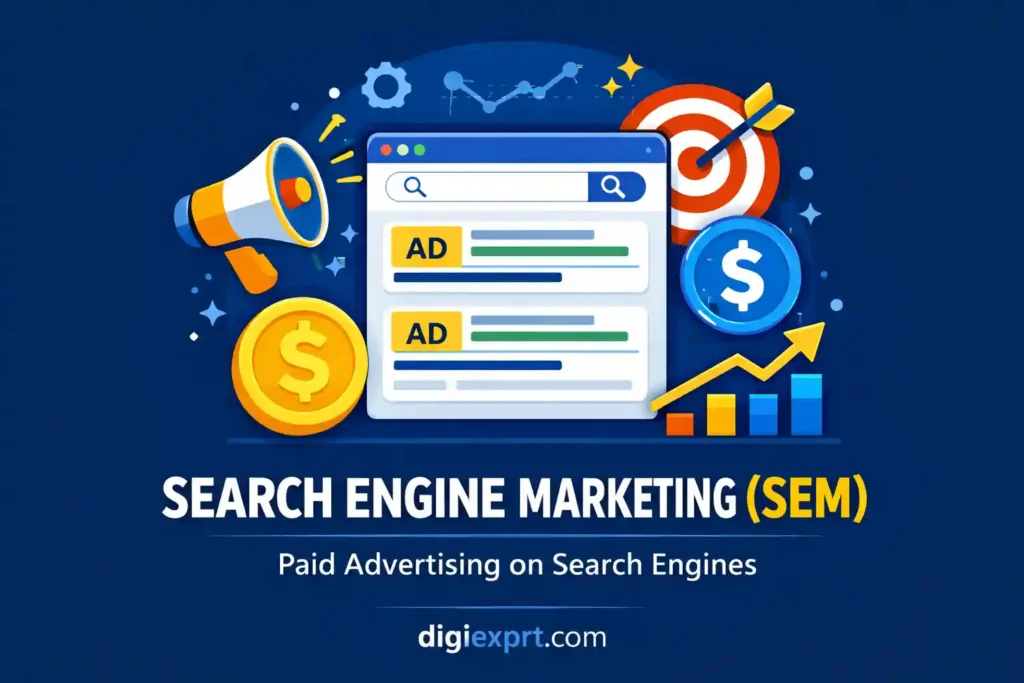
Search Engine Marketing (SEM) refers to paid advertising on search engines like Google and Bing. Businesses bid on keywords related to their offerings, and their ads appear when users search for those terms. You only pay when someone clicks your ad, making SEM a highly controlled and performance-oriented strategy.
How Search Engine Marketing Works
SEM platforms such as Google Ads allow advertisers to:
- Choose relevant keywords
- Create compelling ad copies
- Set daily or monthly budgets
- Target users by location, device, and intent
- Track conversions and ROI
Ads are displayed based on keyword relevance, bid amount, and ad quality score.
Key Benefits of Search Engine Marketing (SEM)
1. Instant Visibility on Search Engines
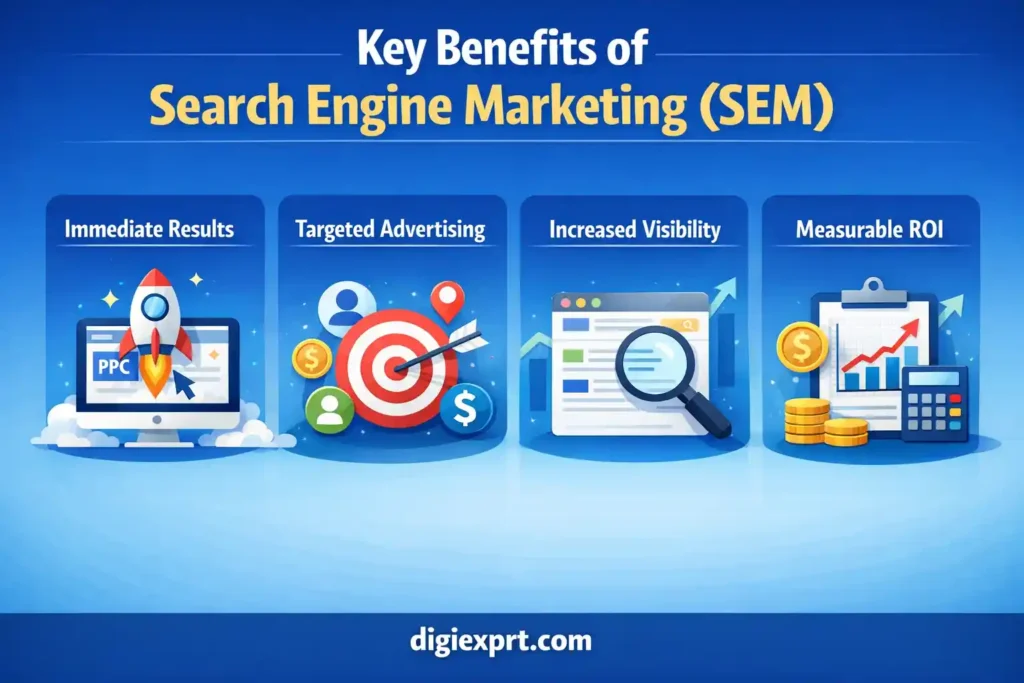
One of the biggest benefits of SEM is speed. Your ads can appear on top of search results within hours, unlike SEO which can take months.
2. Highly Targeted Traffic
SEM allows you to target users based on:
- Keywords
- Location
- Time
- Device
- Search intent
This ensures your ads reach people who are already interested in what you offer.
3. Full Budget Control
With SEM, you decide how much to spend daily or monthly. There’s no minimum investment, making it suitable for startups and small businesses as well.
4. Measurable and Data-Driven Results
Every click, impression, and conversion can be tracked. This makes SEM one of the most transparent digital marketing strategies.
5. Better Conversion Rates
Since SEM targets high-intent users actively searching for solutions, it often delivers higher conversion rates compared to other advertising methods.
6. Flexible and Scalable Strategy
You can start small, test campaigns, and scale successful ads. SEM campaigns can be paused, edited, or optimized anytime.
7. Strong Brand Visibility
Even if users don’t click, seeing your brand at the top of search results repeatedly helps build brand awareness and trust.
SEM vs SEO: A Quick Comparison
| Factor | SEM | SEO |
|---|---|---|
| Speed | Immediate results | Takes time |
| Cost | Paid per click | Mostly organic |
| Control | Full control over ads | Limited control |
| Sustainability | Stops when budget ends | Long-term traffic |
| Best For | Quick leads & sales | Long-term growth |
Both work best when used together as part of a complete digital strategy.
Why Businesses Prefer SEM for Faster Results
Businesses launching new products, running seasonal campaigns, or entering competitive markets often rely on SEM. It provides instant feedback and allows quick optimization.
Many professionals choose structured learning through a digital marketing training program to master SEM tools like Google Ads, keyword research, and conversion tracking. Practical learning helps avoid costly mistakes and improves ROI.
If you’re serious about building skills, enrolling in a digital marketing course in dehradun can give you hands-on experience with real campaigns and expert guidance. Platforms like the Digiexprt digital marketing course focus on practical, job-ready skills that align with current industry needs.
Beginner-Friendly SEM Checklist
If you’re just starting with SEM, follow this checklist:
- Define clear campaign goals
- Research high-intent keywords
- Write clear and relevant ad copy
- Set realistic budgets
- Use proper landing pages
- Enable conversion tracking
- Monitor performance weekly
- Optimize based on data
Common SEM Mistakes to Avoid
- Targeting too many broad keywords
- Ignoring negative keywords
- Sending traffic to irrelevant pages
- Not tracking conversions
- Running ads without testing variations
Avoiding these mistakes can significantly improve campaign performance.
FAQs on Search Engine Marketing (SEM)
1. Is SEM suitable for small businesses?
Yes, SEM works well for small businesses because budgets are flexible and targeting is precise.
2. How much does SEM cost?
Costs vary based on industry, keywords, and competition. You control how much you spend.
3. Is SEM better than SEO?
SEM is faster, while SEO is long-term. Both are effective when used together.
4. How long does it take to see results from SEM?
You can start seeing traffic and leads within hours or days.
5. Which platform is best for SEM?
Google Ads is the most popular due to its large user base and advanced targeting options.
6. Do I need training to run SEM campaigns?
Basic campaigns can be run by beginners, but professional training improves results and reduces wasted spend.
7. Can SEM help with brand awareness?
Yes, repeated ad visibility builds brand recognition even if users don’t click.